Showing posts with label Jack Schron. Show all posts

Wednesday, November 5, 2014

After an easy win, will Armond Budish keep his promise?

Today, at Armond Budish’s first press conference after his victory in the Cuyahoga County executive race, I asked him to name the most difficult moment in his campaign.

He had to think.

“Waking up this morning at 5 a.m. to do a television interview,” Budish said finally, “after [being up] last night and being at the polls all day yesterday.”

Before Election Day, I doubt the guy lost much sleep. Budish was the race’s front-runner from start to finish, ever since Ed FitzGerald and other key Democrats anointed him as FitzGerald’s successor in May 2013.

Jack Schron, Budish’s Republican opponent, was well-qualified and ran a visible, pretty assertive race. That won Schron 41 percent of the vote -- the best performance in 10 years by a Republican sacrificial lamb in a countywide election.

Now Budish and Schron will have to co-exist. Schron ran for executive from a safe seat on the county council, and he chairs its economic development committee. Today, Budish suggested Schron could help with a goal both men share: matching county job training programs with available local jobs.

“[Schron] talked a lot about a business he created to train workers for the jobs that exist,” Budish said. “That’s certainly an area we need to focus on. I look forward to working with him.”

Continuity, not change, was the mood of the day. “Meet the new boss, same as the old boss,” I heard a guy, probably a county employee, say just before the press conference.

Budish’s agenda sounds similar to FitzGerald’s. Today he announced he’s forming his transition team, with three panels to take on his major goals.

An economic growth team will work on attracting new businesses to the region, supporting small businesses, aligning jobs and training, and creating “pathways out of poverty for people who want to work hard.” A regional team will explore ways to make college more affordable, advance clean energy, and deal with foreclosed homes, infant mortality and the health of Lake Erie. A third team will aim to make the government more cost-effective and responsive.

Budish said it’s too early to talk about his cabinet. But it doesn’t sound like he’ll clean house.

“We’ll look at everybody. We'll look at people who are here. We'll look at others,” Budish said. “There’s no plan at this point for making changes. We’ll make changes as needed.”

On hiring, Budish faces a test. He’s a loyal, partisan Democrat with a lot of connections.

He’s taking over five years after voters’ revulsion at patronage and cronyism convinced them to create a new county government. Now, many voters have moved on to new concerns. It’d be easier today to stack a cabinet with party loyalists.

This spring, I asked Budish if he’d root out patronage as aggressively as FitzGerald.

“Absolutely,” he said.

I asked how he’d deal with job requests from political allies.

“Nobody has been promised anything, nor will anyone be promised anything, during this campaign,” Budish said. “Anybody who is hired for any job will only be hired if they are the most qualified person for that job.”

Many people who worked hard to break up the Democratic patronage machine five years ago are nervous about Budish's election. Now that he’s hiring, it’s time for the public and press to hold him to his promise.

Wednesday, October 29, 2014

$50m demolition fund passes Cuyahoga County Council unanimously

Cuyahoga County will soon give cities tens of millions of dollars to tear down blighted buildings. A $50 million bond issue for demolition, debated all year, passed the county council unanimously last night.

The aggressive action addresses one of Cleveland’s most urgent and overwhelming problems. Many city neighborhoods are still scarred by abandoned homes from the recession and foreclosure crisis.

“No one has done anything as ambitious in this nation as $50 million,” said councilman Pernel Jones, a strong supporter of the legislation.

The vote, seven days before Election Day, gave county executive Ed FitzGerald a new accomplishment in the last days of his run for governor. It also affected the race to replace FitzGerald. Jack Schron, the county councilman who’s the Republican candidate for county executive, voted for the demolition plan, even though his attempts to amend it failed.

The council’s Republicans and Democrats ironed out their differences about the demolition program by approving 11th-hour amendments.

The council adopted Republican Dave Greenspan’s idea of letting cities apply for a grant or a loan. The idea is to stretch out the $50 million bond issue, which isn’t nearly enough to demolish the area’s estimated 20,000 abandoned homes. If cities go for a loan, they’ll get a grant of half the loaned money when they pay it back. Cities are expected to apply for grants at first, then loans as the fund dwindles.

Schron's amendment lost 9-2. He wanted to make the grants competitive and establish an independent review committee to make the awards.

“If we don’t change this, that means the county executive, whoever that’ll be, will be making the determination of how the money will be utilized,” Schron said. But council went instead for Pernel Jones’ amendment, which says council intends to create a committee to oversee the program.

Schron dropped his earlier idea of favoring demolition applications for land with high development interest. The county’s bond counsel advised that restrictions on the use of sales tax bonds prevented it.

Schron’s vote for the final legislation prevents his opponent in the executive race, Democrat Armond Budish, from making demolition a defining issue a week before the election. Budish has said he “strongly supports” the program.

FitzGerald adopted the $50 million demolition proposal in his February State of the County address. (Former county treasurer Jim Rokakis had promoted it for years before.) At the meeting’s end, Democratic councilwoman Sunny Simon praised FitzGerald’s leadership on the issue. Her remarks contrasted with complaints two weeks ago from Greenspan and council president Ellen Connally, who said FitzGerald had offered a vague proposal and left the details to council.

The county will borrow the $50 million and pay it back over several years -- despite concerns that county is already borrowing heavily to finance projects such as the convention center hotel.

The county council went forward despite complaints from Cleveland city councilmen Zack Reed and Jeff Johnson that favoring demolition over rehabilitation might hurt the historic character of their neighborhoods. County councilwoman Yvonne Conwell argued two weeks ago that some of the money should go to rehabbing houses, but she also dropped her idea on the advice of the bond counsel.

The Cuyahoga Land Bank will get $9 million to demolish properties it owns. Cities will be able to apply for up to $1 million in the first round of funding and possibly $2 million in later rounds. Every city that shows a need will get an award. Once a city uses 80 percent of the award, it can come back for more.

Under that system, most suburbs will get the money to demolish all their eligible blighted buildings in the first round. The cities with the greatest need -- Cleveland and East Cleveland, and perhaps a couple more inner-ring suburbs – will come back for many later rounds.

Here's the full text of the final ordinance.

Wednesday, October 15, 2014

The politics of demolition put Schron on the spot in the executive race

After a lot of talk and months of negotiations, the Cuyahoga County council is poised to approve a $50 million plan to demolish thousands of blighted houses – just before Election Day.

That puts county executive candidate Jack Schron -- a Republican county councilman – in a political bind. He wants a different demolition strategy. How will he vote?

“This might be our one shot at spending $50 million,” Schron said at a council meeting yesterday. “If we spend it before we’ve ever put the comprehensive plan together, we’ll put the cart way before the horse.”

The demolition plan is heading for a vote Oct. 28. Will Schron vote no, a week before the county executive election, and create a contrast between himself and his opponent?

The idea of borrowing $50 million to battle blight has been in the works a long time. Former county treasurer Jim Rokakis and various political candidates suggested it, and executive Ed FitzGerald adopted the idea in his February State of the County address. But it had languished in council for months.

Yesterday, the legislation picked up speed. As the council hashed out details, political tensions flared.

Dave Greenspan, the frugal conservative, argued for loaning money for demolition instead of making grants. Yvonne Conwell, who represents much of Cleveland’s East Side, argued that some of the money should go to renovations. The mayors of Shaker Heights, Lakewood and Parma addressed the council, arguing some of the money should be guaranteed for inner-ring suburbs.

Greenspan and curmudgeonly council president Ellen Connally, both critics of FitzGerald, complained about him again.

“This matter was talked about, and suddenly the executive announced it was going to happen,” Connally said, “and we didn’t have any legislation. So we really had to do the down and dirty work.”

Pernel Jones, also from Cleveland, took the lead in arguing for the legislation as written.

“I thought it’d be a whole lot easier to give away $50 million,” Jones said with a smile.

That left an opening for Schron, the manufacturing CEO who seeks efficiency in government.

“It probably is easy to give away taxpayers money,” Schron replied. But even $50 million isn’t nearly enough to tear down all of the estimated 15,000 abandoned buildings in Cuyahoga County.

So Schron, who built his company’s headquarters on a Cleveland brownfield, argued that the demolition program should work more like the state’s brownfields program. He said it should favor sites where a business wants to develop and banks want to invest, near economic development engines such as the Cleveland Clinic.

“The comprehensive plan should come before the money starts to get spent,” Schron argued.

Dan Brady, rumored to be a top contender for council president next year, challenged Schron.

“Plans can get more and more and more comprehensive and never happen,” Brady said. “I’ve seen it over and over and over in government.”

Soon after, Connally called for the legislation to move forward. Council members can propose amendments over the next two weeks, she said.

“Is it the intent that we would be voting on this final legislation in two weeks?” Schron asked.

“It is our anticipation that we vote on the final legislation in two weeks,” Connally replied coolly.

“Will there be no other opportunity for public participation?” Schron asked.

“The public has had every opportunity to come to our meetings, to submit information,” Connally said.

Schron looked peeved. He shook his head, ever so slightly, and said he’d offer an amendment.

After the meeting, I asked Schron if he was frustrated. He said he wanted more time to get the council to consider his ideas. He smiled and said he might hold a press conference about the issue.

I asked if he’d vote for the demolition fund if his amendment is defeated. “I’ll have to wait and see,” he said.

Across the room, Brady was talking with a focused confidence, as if he’d taken the temperature of the room and found it to his liking.

I asked if he had the votes to pass the legislation as it is now.

“Yes,” he said.

What about the amendments still to come?

“If the legislation gets to a place where it’s not going to work, I’ll no longer support it,” Brady said.

Would Schron’s amendment keep it from working? “Yes, and it would take us another six months,” Brady claimed. Blight in Cleveland will get worse if the city can’t tear down abandoned homes, he argued. “It’s an emergency situation.”

Schron can’t be happy that the council’s Democratic majority is forcing him to vote on the demolition plan seven days before Election Day. But if he has to take a stand, he seems ready to use it as an example of how he thinks differently.

He’s trying to make the demolition program business-friendly, to open up land with blighted buildings on it for development. It could be a good way to grow the tax base. But, it could also mean less demolition in city neighborhoods where the real-estate market has hit bottom.

Armond Budish, Schron’s opponent in the executive race, says he “strongly supports” spending the $50 million. So if Schron’s amendment gets shot down, he’ll face a tough vote Oct. 28. Does he vote no and position himself as the more cautious spender, even though Budish may use that vote against him in the city? Or does he vote yes, for a proposal he thinks could be better, to assure voters he’ll take on the blight issue if elected?

Monday, September 29, 2014

Reform and resumes, or activism and empathy? Schron & Budish clash in county exec debate


Finally, the Cuyahoga County executive race is heating up. Armond Budish and Jack Schron’s debate today didn’t upend or shift the contest to succeed Ed FitzGerald, but it did provide voters a good sense of the choice they face.

Is it a resume battle? Another reform election? Or just a liberal vs. a conservative? At the City Club of Cleveland debate today at the Renaissance Cleveland Hotel, it was all three.

Budish, the former Ohio House speaker, started the race with an advantage because of the magic D next to his name. He presented himself as a passionate advocate for the poor, a resurgent town, and an active government. “The most important skill for a county executive [is] empathy for people,” Budish said.

Schron, the Republican county councilman, aimed his message at independents. He cast himself as the candidate with the best resume, the experienced CEO who’ll sustain the momentum of the county’s post-corruption reforms. “Cuyahoga County needs someone who’s been there,” Schron said, “someone who’s created jobs.”

Budish, running as a new-economy Democrat, tried to out-entrepreneur Schron, the CEO of Jergens, Inc. “It’s tough to get banks to invest in new startups,” the Democratic state representative said in his opening statement. He proposed creating a county venture capital authority and offering microloans, “maybe $25,000 that a small barbershop or corner store might need to expand.”

Schron asked voters to look beyond party labels and compare resumes to the job description. “[I’m] an executive in charge of a multinational corporation that makes things and sends them all over the world,” he said. He retold the story of Jergens, Inc.’s decision to build its headquarters in the old Collinwood rail yards. Its diverse workforce, he said, “looks like the city of Cleveland.”

Budish boxed Schron with a right jab and left hook on the county’s other main task besides job creation: caring for the poor. He stole an idea I first heard from Schron months ago: using iPads and smartphones to sign up more social-service clients. After Schron, too, talked up iPads, saying they could streamline services, Budish claimed Schron was too much the penny-pincher, focused “strictly” on bottom lines, “efficiencies and saving money.” Budish said he wants to lift more people out of poverty by connecting them to existing county programs.

Schron struck back. “I would say [Budish] doesn’t know what it takes to run an organization,” he said. Efficiencies in government would free up millions more dollars for social service efforts, Schron argued. Budish replied he hadn’t seen Schron propose legislation about efficiency.

Throughout the debate, Budish brought up partisan differences between him and Schron, while Schron argued that the county executive job should be nonpartisan. Budish went after Schron on labor rights, voting rights, and Medicaid expansion, issues more relevant to a statewide campaign than a local one. Schron reminded listeners that corruption had festered during the old county system’s one-party rule. He hit Budish for opposing the 2009 county charter that created the job he now wants. He also implied Budish will use it as a path to higher office. “We want somebody who actually wants to be here,” Schron said.

During the audience questions, Bruce Akers, a Republican and a framer of the charter, tried to get Budish to pledge to serve two terms. As usual, Budish implied he wants to be executive for a long time, but left himself wiggle room for 2018. “I’d like to stay as long as I can, but it’s going to be up to two things, my health and voters of this county,” Budish said. “To talk about a second term or third term [is] premature.” Schron pounced, and pledged to run for a second term if elected.

The debate did expose some previously unseen differences between the candidates. Schron is against creating a county department of sustainability (he says he values all jobs, not just green jobs). Budish said the county government could encourage local governments, businesses and homeowners to become more energy-efficient.

Budish said he “strongly supports” FitzGerald’s proposal to float a $50 million bond issue to demolish abandoned houses. He added that he wants it spent as part of a larger strategy that also includes rehabbing some vacant homes. Schron also asked smart questions about whether the $50 million would be spent strategically enough to have an impact, but he sounded like he’s not a sure vote on council for the plan.

Both candidates sounded smart, qualified, and relatively well-informed. No one won the debate – which, given the electorate’s partisan imbalance, works in Budish’s favor.

Really, Budish and Schron were debating a bigger question: what is this county executive position? Do you want a CEO-style leader, or an activist liberal? Will all future campaigns for the position focus on jobs and social services, much like all mayor’s races are about jobs, schools and safety? Is the county a second front for the partisan debates in Columbus, or will a less partisan executive be more effective? Do we still need to focus on a post-corruption spirit of reform and bipartisanship, or is it time to pivot to activist government?

Thursday, July 17, 2014

Will the corruption watchdog get protection?

Today, the Cuyahoga County council will debate a bunch of possible amendments to the county charter. The most important would create new protections for the inspector general, the government’s anti-corruption watchdog. It’ll be a close vote.

The inspector general’s office gives employees and the public a confidential place to report wrongdoing. The first inspector general, Nailah Byrd, has looked into a lot of small allegations about misused public money and time and prompted the resignation of several employees.

But the inspector general’s real moment of truth will come someday, when the office fields a serious allegation against a county executive, a council member, or one of their political allies. Will the inspector general be able to investigate without punishment?

Right now, a council that didn’t like an investigation could simply vote to fire the inspector general or abolish the office. A charter amendment written by Dave Greenspan, a reform-minded Republican councilman, would protect the inspector general by adding the office to the charter. An inspector general would be appointed for a four-year term and could only be removed mid-term by a two-thirds council majority.

The amendment has bipartisan support. Jack Schron, the county councilman and Republican candidate for county executive, predicts voters would approve it if they get the chance.

So what’s the holdup?

Council president Ellen Connally opposes the amendment. She questions the size of the inspector general’s budget, about $1 million, and she questions why investigations are made public whether a complaint is founded or not. Worthwhile questions, but the council would still have the power to address them if an amendment passes.

Sunny Simon, the council’s vice-president, could be a swing vote. She wants to allow a simple majority of council to fire the inspector general. That may not be enough protection in the future, if a political machine controls both the executive's office and council.

Another proposed charter amendment would require the executive to get council’s approval to fire the sheriff. Some council members will support this because they don't like the fact that Ed FitzGerald fired Bob Reid in 2012 with very little explanation.

The amendment would also guard against corruption, because a future county executive wouldn't be able to fire a sheriff to stop an investigation.

The council will meet today at 1 pm to decide which charter amendments to move forward.

You may hear more about other proposed amendments. A voting-rights amendment, which would give the Democrats a new weapon in Ohio’s endless war over election rules, is likely to split the council along partisan lines. Schron wants to make county elections nonpartisan, presumably to give future Republicans more of a chance in executive and prosecutor races.

Don’t let the partisan debates distract you.  If you care about keeping Cuyahoga County’s government corruption-free, and if you think the public needs more protection from the power of political machines, then the inspector general is the most important reform of all.

Update, 7/18: The council didn't get to the inspector general amendment yesterday. It's on the agenda for the July 22 meeting at 2 pm. The council voted 6-5 to advance the sheriff amendment to a final vote. But its odds are bad. Amendments need eight votes to get on the November ballot.

Update, 7/23: The council advanced the inspector general amendment yesterday on a 9-2 vote, after approving Simon's change that would allow a simple majority of council to fire the IG. They'll vote Aug. 12 whether to put it on the November ballot.

Update, 9/4: The inspector general won't make the ballot. It only got 6 votes out of 11 last month, and it needed 8. Explaining his no vote, councilman Mike Gallagher compared the inspector general to "Big Brother" and claimed she was trying to spy on county workers by obtaining video feeds. Later, he retracted his criticism -- but he still doesn't support protecting the inspector general in the charter.

This issue isn't going away. Jack Schron is championing the inspector general in his campaign for county executive.

Friday, May 23, 2014

Do Budish and Schron disagree about anything?

Nick Castele/ideastream
Armond Budish and Jack Schron shared a stage last night and agreed on almost every question they were asked. In fact, the Democratic and Republican candidates for Cuyahoga County executive found so much common ground that I left their first joint candidates’ forum wondering what this election’s going to be about.

Instead of contrasts or any big ideas, the 100 or so voters at the county library’s Parma-Snow branch got a sense of Schron as the inside guy, the county councilman who knows the issues and wants a promotion to the top job, and Budish, the outsider, who’s studying up and can talk about the big picture a little more clearly.

For instance, Schron said he’d be open to talking with Cleveland Mayor Frank Jackson about the city closing Burke Lakefront Airport. But Budish said so more clearly, without ifs attached, so he got the credit from The Plain Dealer.

The two candidates agree on so much, we can see where the newly powerful county government is and isn’t going, no matter who wins. Budish and Schron agreed on:

- Building a new MetroHealth hospital.

- Building the convention center hotel.

- Talking with Cleveland about closing Burke.

- Not encouraging suburbs to merge, but helping them share services instead.

- Courting the 2016 Republican and Democratic national conventions.

- Extending the cigarette tax to fund arts and culture in 2016.

- Helping the inner-ring suburbs with economic development.

- Resolving the disputes between county judges and the executive.

All that happy unity may pay off if Budish wins in November. Schron has two more years on the county council, so they’d have to work together. Still, is there really no difference between how Democrats and Republicans would run the county?

I think there is, and hopefully we’ll hear about it in the five months before the election. We need to hear more about how Budish and Schron want to encourage job growth, promote education through scholarships, and better provide for the needy – the key goals in the new county charter.

Last night, Budish said he’s a “strong supporter” of current executive Ed FitzGerald’s plan to float $50 million in bonds to demolish abandoned houses. Schron didn’t get asked about it. Would Schron battle blight as aggressively as Budish?

Schron says he wants to guarantee the county inspector general’s independence by making the office a part of the charter. If the county council had put it on the ballot last year, “I’m confident the community would’ve passed it,” he said. Would Budish advocate for a charter-protected inspector general?

Budish said he was “frankly surprised that we come up with a new charter, and there’s nothing in it about expenditure limits” for political campaign donors. Unlike other campaign finance laws, limits on what a single donor can give a single candidate are still on solid legal ground. But Schron voted against putting that on the ballot last year. Could he explain, at one of these forums, why one rich donor should be able to singlehandedly fund a candidate’s entire campaign?

Schron wants the county to aggressively recruit out-of-state companies to relocate or expand in Cuyahoga County. Would Budish do that if elected? Budish wants to create a local venture capital fund and a talent recruitment initiative. Would Schron support those ideas?

Hopefully, the two candidates, who got along so well last night, will meet again often in the next five months. And hopefully, they’ll challenge each other to talk about big ideas. Consensus is great. Complacency isn’t.

Wednesday, May 7, 2014

Budish wins ridiculously uncompetitive primary for Cuyahoga Co. executive

No wonder Armond Budish hardly bothered to advertise. He knew he didn't have to.

Budish obliterated his hapless opponents in the Democratic primary for Cuyahoga County executive yesterday, winning 56 percent in a six-way race, continuing his ascension to Northeast Ohio's most powerful political job.

When I started reporting "The Anointed One," my May issue profile of the inevitable Budish, people tried to convince me I was making a mistake by focusing on him.

Jack Schron, Budish's Republican opponent in November, warned me I could be setting up Cleveland Magazine for a "Dewey Defeats Truman" embarrassment. Schron warned me a private poll showed state Sen. Shirley Smith and former sheriff Bob Reid just a few points behind Budish in the Democrats' primary. (You can read Reid's email about the poll on Smith's Facebook page.)

Yeah, not so much. Smith got 20 percent yesterday, Reid 7 percent.

In a way, the race was over a year ago. Budish hustled so hard for early endorsements and donations, he clinched nearly all the elite support and discouraged other potential candidates from joining the race. The result was the most ridiculously uncompetitive election in years for a major, open job in Cleveland politics.

Budish's supporters will tell you that's because the candidate's so fantastic, of course.  My fear is he's ushering in an era when the race always goes to the swiftest, most moneyed Democrat, when we'll know who our next mayor, county executive, congressperson, et cetera will be long before our chance to vote.

The task of breaking that up now falls to Schron. He's the Republicans' strongest local candidate in a long while, a county councilman and corporate CEO who'll have plenty of campaign money. That, plus a national Republican surge this November, could give him a miniscule chance to end the Democrats' 22-year winning streak in Cuyahoga County-wide races.

Budish does seem to take Schron seriously. He criticized Schron by name this spring while ignoring his Democratic opponents.  Besides, Budish must be hoarding his campaign funds for some reason -- most likely, to run TV ads against Schron in the fall.

Schron probably won't win, but he can thoughtfully challenge Budish, pierce the frontrunner's scripted talking points, get him to defend and hone his arguments, and extract specific positions and promises he can be held to later. That could position Schron as Budish's chief critic on the county council after Budish wins the executive job.  In this uncompetitive era of local politics, that may be the best anyone can do.

Wednesday, January 19, 2011

Revised thinking on boards of revision

The county council is bracing itself for its first major disagreement with Ed FitzGerald -- and trying to prevent an all-out war with the Plain Dealer. It’s poised to reappoint two people who joined the boards of revision late last year – after the exposés that called the integrity of local property valuations into question.

The county executive and the daily paper insist that no one on the boards of revision should be reappointed. They want a “clean sweep,” they say. But the council will choose most of the new board members -- and it sees a clear distinction between the longtime board members who served during the scandal years and people named to the board to cope with the scandals’ fallout.

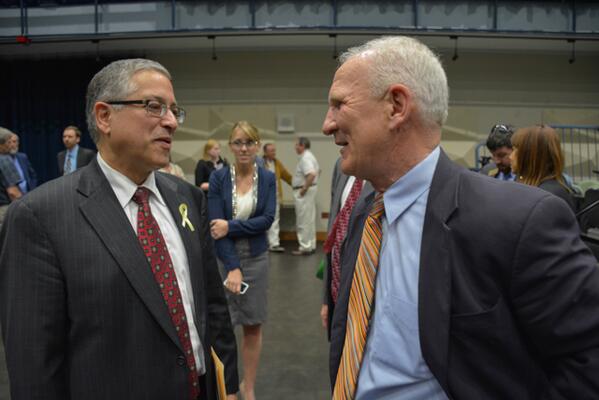
“Someone who came on board after all the problems, and someone who stepped up to help the county out as those taxpayers’ cases were backing up … I think they’re in a different category,” says Jack Schron (pictured), a Republican councilman. He and council president C. Ellen Connally are meeting with the Plain Dealer editorial board today to try to get the paper to give the recent appointees a chance.

Two of council’s eight leading candidates for the boards of revision are post-scandal appointees who joined the boards in August 2010 or later, Schron tells me. (He wouldn’t name them because they haven’t passed pre-employment checks yet, but he said they weren’t Frank Russo appointees.)

“Some of these people, they were asked to take on a yeoman’s task of coming forward and helping our the county in a backlog situation and help work through it,” Schron says. “It’s hard for me to find fault with people who stepped up and made a civic commitment.”

Schron says council is unlikely to reappoint any longtime board of revision incumbents.

“Whether or not they did anything improper, they were in that era where the public is looking for a fresh start,” he says. “Unfortunately, some of them might get caught up in that. … It doesn’t mean they couldn’t be a candidate, but it’s going to be a lot harder to get past all the concerns people have.” That’s not just his opinion: “I do believe that’s the general consensus [on council].”

Four of the 28 candidates council recently interviewed are longtime incumbent board members. That means they arguably share responsibility for the shoddy or questionable work the Plain Dealer exposed: half-days of work, bad record-keeping, board members lowering the tax values of each others’ properties. One has dropped out since.

Seven other candidates joined the boards between August and November 2010, after the exposés. They’re the candidates that the council and the executive disagree over. County chief of staff Matt Carroll confirms that FitzGerald wants even the post-scandal hires cleared off the boards.

“Even those people were not selected in an open way,” Carroll told me Friday. “It was a closed process. People were not given the opportunity to apply. Some people were selected, possibly [people] of quality, but the fact that it was not an open process, that is a reason they could not be reappointed. That is a continuing taint to the process. That’s the difference. [There’s] a different level of quality and culpability, but that [they were] not part of an open process continues to concern.”

This seems pretty weak to me. Someone who joined the boards in the fall isn’t the least bit “culpable” for bad practices exposed earlier. And anyone who gets reappointed will have answered an open posting this time and made it through a four-step screening process.

That’s unlikely to satisfy the Plain Dealer. Like an overzealous watchdog that tries to bite everyone who startles it, it’s made the county council its favorite new chew toy. (It bit the council six times in five days last week: Monday, Monday, Wednesday, Thursday, Thursday, Friday.)

That’s why Schron and Connally are trying to get the editorial board to reconsider its opposition to the recent appointees. “Sorry, draining the swamp halfway cannot be an option,” an editorial snarled unpersuasively last week.

If the PD starts howling again about the board of revision, casting council as the old guard, politics as usual, etc. etc., it can probably do a lot of further damage to the council’s reputation. Or it could change its mind and draw a basic distinction: Between those who share responsibility for the board of revision’s past failures and those who don’t.

Update, 1/21: Today's editorial signals a welcome truce, or at least some détente -- ruining my plans to create a drinking game out of the PD's county council coverage. (If the paper uses the phrase "secret meeting," slam your drink!)

Thursday, January 13, 2011

Republicans named to key county council committees


The new Cuyahoga County council made a major bipartisan gesture this week, appointing councilmen from the Republican minority to two of its most important committees. Jack Schron Jr. of Chagrin Falls will chair the economic development committee, while Dave Greenspan of Bay Village will chair the ethics and rules committee.

That means Republicans will be in leadership positions on two major parts of the county's reform agenda. Economic development is the new county charter's number-one goal, and writing a strong new ethics policy is one of the council's biggest tasks.

Schron (photo on left) is so well-qualified to chair economic development that any other choice would've been a snub: he's a businessman, the president of the Collinwood manufacturer Jergens, Inc. Greenspan (right), who proposed an ethics policy for the county during his campaign, has helped set up a brand-new government before: he was a councilman in the newly incorporated city of Sandy Springs, Georgia in 2007. His committee will also oversee any revisions to the charter.

Eight more committees still need to be organized. The eight Democrats on council will probably get most or all of those chairmanships, setting up an interesting division of labor. Democratic committee chairs will lead the oversight of county government's traditional functions, such as human services, justice affairs, and public works. Republicans will oversee the areas where voters most want change.

You can read the council's press release here. Here's a bio of Schron and a bio of Greenspan.

Monday, January 3, 2011

Council chooses Connally as president, tackles board of revisions mess


A really tiny girl belted out the national anthem with a huge, blistering voice. An honor guard marched the U.S. and Ohio flags to their posts. Rev. Marvin McMickle prayed the new council would “resist cliques, schisms, and partisan divides.” And one by one, the 11 new Cuyahoga County council members took their oaths of office with something close to 11 different Bibles, swearers-in, and pronunciations of “Cuyahoga.”

Then they got to work, choosing C. Ellen Connally as president and setting up interviews to fill the troubled boards of revisions.

A month ago, Connally’s bid for the council presidency looked like it was in trouble. The Plain Dealer, supporters of rival Chuck Germana, and a good number of regular citizens were denouncing her for lining up support in a private meeting. But the coalition behind Connally held firm tonight. All seven Democrats other than Germana voted for her.

Despite McMickle’s prayer, the vote for vice-president split exactly along party lines. Sunny Simon got all eight Democrats’ votes, while the Republicans voted as a bloc for Jack Schron. It’s a reminder that, though the Plain Dealer cast the leadership contest as a matter of secrecy versus openness, it was really more about Democrats versus Republicans.

“In this past month and a half,” Connally said, “we’ve come to work together and respect each other's views. ... I recognize the missteps along the way, but I hope in this new year and this new government, we can put all that behind us and move forward.”

The council also started to tackle the fallout from the old government’s scandals. It voted to interview candidates for the troubled boards of revisions starting tomorrow morning. “The board of revisions is one of the most severe problems facing Cuyahoga County,” said Dale Miller. They’re moving fast, Miller explained, because county executive Ed FitzGerald has said he’ll fire any board of revision members who don’t resign, so that the new government can choose its own appointees. The council will choose two members of each revision board, FitzGerald one.

FitzGerald has said he won’t appoint anyone who served on the boards in the past and has asked the council not to either. But council has agreed to interview past board members who’ve reapplied and passed a test and a screening by the county human resources department.

The council also approved the rules it’ll follow. It’ll allow for public comment at the beginning and end of every meeting. It’ll set up ten committees to work on legislation, including one on economic development and one on ethics and oversight. Non-voting members of the public can be added to subcommittees. The idea, Miller said, was to provide for lots of transparency and public input.

When I asked Miller about the rules at a recess, he said he’d e-mail them to me. He sent them about an hour after the meeting ended. (You can read them here.) They include a public procedure for choosing the next council president and vice-president. Yeah, I’d say the council is trying to move beyond the “secret meeting” flap.

To read my profile of Ellen Connally from the November issue of Cleveland Magazine, click here.