Showing posts with label j. kevin Kelley. Show all posts

Tuesday, February 25, 2014

Kevin Kelley talks vacant housing, council discipline, East Cleveland merger


My Q-and-A with Kevin Kelley, Cleveland’s new city council president, is out now in the March issue of Cleveland Magazine.

Kelley’s election may lead to a more assertive city council than we’ve seen in eight years. His predecessor, Martin Sweeney, valued cooperation with Mayor Frank Jackson and let the mayor's office set civic priorities. Kelley’s agenda for 2014 includes initiatives on vacant housing and gun violence, both still in the study stage.

The 45-year-old councilman from Old Brooklyn talked with me about his insistence on better discipline and decorum in council, his plans to step up home demolitions, and his thoughts on whether Cleveland should annex East Cleveland. Here’s an extended version of his answers. You can read his comments about why he supports extending Cuyahoga County’s alcohol and cigarette tax for stadium repairs in this blog post.


CM: What are your plans for vacant housing?

KK: The council has commissioned a study to look at the effect of demolition and how it affects property values. We need to aggressively attack these houses. Some homes are candidates for restoration, but what’s really causing the devaluing of real estate is the 5,000 we can all agree need to come down. The biggest challenge is not identifying the houses to come down, but identifying the money.

CM: Councilman Jeff Johnson will often make the case: I don’t just want demolition, I represent a historic neighborhood, I want some of these properties preserved, and I want to find money for that too.

KK: Certainly there are some [houses] that are candidates for restoration. But the biggest part of the problem is those that must come down. Even councilman Johnson or those who are active in the historic preservation community would agree that there are homes that are beyond saving. It’s bringing all of our property values down.

CM: At a retreat just after New Year’s, you told councilpeople to show up to meetings, show up on time, understand what they’re voting on, and pay attention to testimony. But only 10 out of 17 councilpeople attended your retreat. Does that prove your point?

KK: No. That was something I wanted to do before we started the session. I knew it was during the holidays, some people told me they were out of town visiting family. If it were held while we were in session, I’m confident we’d have 100 percent participation.

Look at attendance and punctuality since that retreat. Every meeting has started within 3 minutes of its starting time. We’re acting in a more professional manner. I think we’re taking things more seriously. I’m trying to make people more cognizant of the fact that when you sign your signature or cast a vote, millions of dollars are appropriated. When you consider the enterprise funds and the general fund, we appropriate over $1 billion a year. That’s something we need to be aware of, and that’s why I insist everybody be at their seats when the roll is called.

There was not a lot of chatter during the legislative portion of the meeting. There was not a lot of roaming around. The directors have agreed to come to meetings 10 minutes early to discuss any issues councilmembers might have so that please don’t have to roam around during the meetings. Overall, these changes are being accepted by my colleagues.

CM: What do you think about talk of Cleveland and East Cleveland merging?

KK: We need to commission a study that will look at whether this makes sense for both communities. It’s an intriguing opportunity, but we need to look at the cost of providing services to East Cleveland. There’s a lot of risk, but a lot of opportunity. It’s too early to say whether it’s definitely something we should or should not do. We need to take a very sober, thoughtful approach to this.

CM: What are the risks for Cleveland?

KK: The risks are that our budget is very tight. There’s not a lot of extra money. Our biggest challenges are providing safety forces. They take up 55 percent of our budget. Are we able to extend that level of service to what would be a new part of the municipality? Are we able to deal with the infrastructure challenges that East Cleveland poses? We have our own infrastructure challenges, in terms of the conditions of our roadways.

CM: What are the opportunities for the city?

KK: The opportunities are, there’s a lot of gems in East Cleveland. There’s a lot of nice old houses, parks, industry — [GE’s] Nela Park is still there. They have big city problems on a small city budget. If we come together, and that helps our ability to bond projects, can we be better together because of our now increased population, income tax and property tax values?

When we look at the big-city problems some of our inner-ring suburbs are facing, it’s an opportunity to demonstrate to other communities that by coming together, we can solve these problems together. We can make this work, we can do a merger and keep the local character, but get the benefit of working together.

CM: Could this pave the way for other mergers in the future?

KK: If it’s determined that it’s in Cleveland’s interest, and it is done well, and it can demonstrate that because of its merger, East Cleveland is in a much better position and Cleveland is in a better position — then yes, it can be seen as a transformative step that other communities can take and [a way] we can build a better Greater Cleveland.

CM: What was it like to be Kevin J. Kelley when a J. Kevin Kelley in the town next door was indicted on corruption charges?

KK: That was an interesting time! When it first happened, there was quite a bit of confusion. A couple of callers to my office were “so disappointed” in me. It was a tough time. With each subsequent headline, the effect on me lessened a little bit. But every now and then, one of my friends’ moms would say, “Oh, I know Kevin’s going to be OK. I know he didn’t do anything.”

Thursday, August 22, 2013

McGinty likely wants to question Dimora about 2005 Ameritrust deal


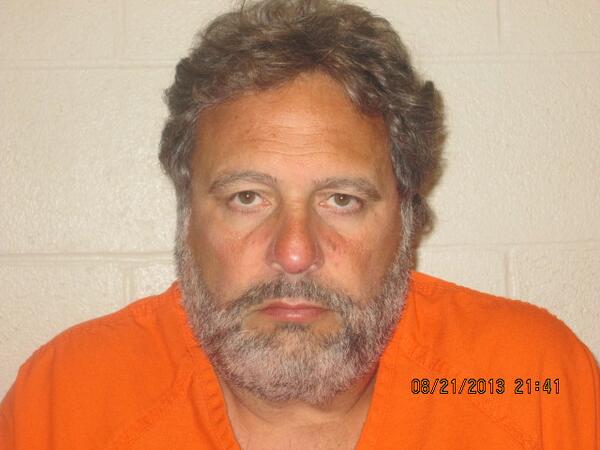
What's Jimmy Dimora doing in the Cuyahoga County jail? He was moved there from federal prison last night, and in his jail booking photo, he doesn't look too happy about it.

Journalists' Twitter feeds lit up with the news this afternoon. Several reporters said Dimora will go before a county grand jury. Why?

"Prosecutors apparently want to question Dimora about lawyer Anthony Calabrese/Ameritrust deal," WKYC's Tom Meyer tweeted.

I think Meyer's right.  County prosecutor Tim McGinty is trying to get to the bottom of the last big unanswered question in the five-year-old county corruption scandal: Was the county's 2005 purchase of the Ameritrust Tower corrupted in some way?

This January, county executive Ed FitzGerald told me he'd asked McGinty to investigate the Ameritrust purchase, especially corruption defendant Anthony Calabrese III's role in it.  McGinty did just that.

The prosecutor hit Calabrese with a six-count indictment last month, including conspiracy and corruption charges that include the 2005 Ameritrust deal.

The indictment charges that Calabrese -- then an attorney for The Staubach Co., a real estate consultant for the county on the Ameritrust deal -- got Dimora crony J. Kevin Kelley to provide him with "non-public information ... from Dimora relating to the then-forthcoming purchase of Ameritrust by Cuyahoga County." After the sale went through, McGinty alleges, Calabrese arranged for an unnamed businessman to pay Kelley a $70,000 bribe for his help.

Now, the reports that Dimora will be put before a grand jury to testify suggest that McGinty is considering further charges against someone. Where's he going with this?

Dimora is named as an unindicted co-conspirator in the Calabrese indictment. It mentions him in connection with the Ameritrust sale and Dimora's famed trip to Vegas.  Why rehash Vegas?  Because conspiracy charges can reach back beyond Ohio's six-year statute of limitations on bribery. To charge anyone with crimes related to the 2005 Ameritrust deal, McGinty needs to prove that it was part of a larger conspiracy that was still active six years ago.

Federal investigators also looked into Calabrese's ties to the Ameritrust deal, and they charged Calabrese with witness tampering in relation to the $70,000 payment to Kelley -- but they dropped that charge when Calabrese agreed to plead guilty to 18 other crimes. Significantly, Calabrese's federal plea deal included no agreement to cooperate with the feds. Does that mean he still has secrets to keep?

==

To read more coverage of the 2005 Ameritrust purchase, follow these links:

"FitzGerald: Calabrese holds key to 2005 Ameritrust inquiry," Jan. 30, 2013

"FBI, IRS investigated Dimora, Kelley, payment to Staubach Co. over Ameritrust Tower purchase," June 7, 2012


Friday, April 5, 2013

McGinty revives corruption investigation with state charges against Calabrese

A weekend surprise: Tim McGinty, who promised to crack down on public corruption when he ran for Cuyahoga County prosecutor, is picking up some leads from the federal government’s six-year-old county corruption investigation. Just when you thought everyone had pleaded guilty, it looks like there's more to come.

Late today, a grand jury indicted attorney Anthony Calabrese III (pictured) on two counts of bribery and one charge of theft by deception. All three charges seem closely related to federal charges to which Calabrese has already pled guilty.

“Cuyahoga County Grand Jury Issues First Indictment for Corruption Related Offenses,” reads McGinty’s press release, which went out at 5:36 pm. And yes, that word “first” implies what you think it implies.

“There will be more indictments,” McGinty’s spokesperson, Maria Russo, said this evening. She wouldn’t elaborate.

Calabrese is charged with bribing Jimmy Dimora and Frank Russo, indirectly, by directing J. Kevin Kelley to pay for their tickets to Las Vegas in 2008, in order to get Dimora and Russo to help restore funding to Alternatives Agency, a nonprofit Calabrese represented as a lawyer. In the theft by deception charge, Calabrese is accused of getting Alternatives Agency to pay Kelley and Anthony Sinagra as consultants, even though they did no work.

But Calabrese has already pled guilty to federal charges involving the trip to Vegas and the consulting payments to Kelley and Sinagra – bribery, bribery conspiracy and mail fraud conspiracy, to be exact.

So what’s going on?

Today’s charges could be part of a mop-up operation, where McGinty looks at whether leads from the FBI investigation point to violations of state law. He may be looking to file direct charges of bribery and theft where the feds could only make conspiracy, wire fraud or mail fraud charges.

McGinty may also be taking over late-breaking leads in the corruption probe. Federal law has a five-year statute of limitations on bribery and similar crimes, so the U.S. Attorney’s time to file new charges from the corruption probe is running out. (The FBI raided the county building, breaking up the corruption regime, on July 28, 2008.) But Ohio has a six-year statute of limitations, so McGinty has more time.

What might the new lead be?

I wonder if McGinty is probing Calabrese and Kelley’s relationship because he wants to know if they corrupted the county’s 2005 purchase of the Ameritrust complex. County executive Ed FitzGerald told me in January that he’s asked McGinty to probe Calabrese’s relationship to the Ameritrust deal.

At one point last year, federal prosecutors alleged that Calabrese promised to reward Kelley if he successfully lobbied Jimmy Dimora to vote to buy the Ameritrust property. Two months after the sale, the feds claimed, Kelley received $70,000 and a company with a tie to Calabrese received $99,000 from unidentified sources.

But the feds aren’t pursuing that lead anymore. They included it in a witness tampering charge against Calabrese, but dropped that charge in exchange for Calabrese’s guilty plea on 18 other counts.

Calabrese, unlike the other federal corruption defendants, didn’t agree to cooperate with investigators when he pled guilty. So the new charges could increase the pressure on Calabrese to make a deal with McGinty. (Calabrese also faces charges in an unrelated case: he's charged with trying to bribe rape victims to change their testimony at a sentencing.)

Calabrese is the last big lead in the corruption probe.  What more might he know?

Update, 4/14: The Plain Dealer runs a front-page followup today that's basically an 1,120-word question mark. It quotes a bunch of people puzzled over what the hell McGinty's doing. The story says McGinty "stunned federal officials" by charging Calabrese, but doesn't give details.

If McGinty really is just going to pile state charges on top of everyone's federal charges, that's really weird.  I still think McGinty may be trying to work his way up to probing the Ameritrust scandal. But Jim Jenkins, attorney for corruption defendant Daniel Gallagher, offers the PD another theory: McGinty may be trying to go after the corrupt officials' pensions.

Wednesday, January 30, 2013

FitzGerald: Calabrese holds key to 2005 Ameritrust inquiry

The Ameritrust debacle is almost over. Cuyahoga County is on the verge of selling the old bank complex for $27 million -- or $18 million less than it spent on it.

But there’s still a major question about the old government’s 2005 purchase of the Ameritrust complex. Will the public ever know if it was just an unwise deal, or if wrongdoing was involved?

County executive Ed FitzGerald thinks attorney and corruption defendant Anthony Calabrese III knows the answer, and he wants county prosecutor Tim McGinty to get it out of him.

“You asked what the chances are the public will ever know,” FitzGerald said to me last week. “I think Mr. Calabrese knows! And I think he has even more incentive to be cooperative with the county.”

Calabrese (pictured), the last defendant to plead guilty in the federal government’s Cuyahoga County corruption probe, finally admitted to 18 corruption crimes this month. But federal prosecutors agreed to drop the one charge that involved the Ameritrust complex.

Meanwhile, McGinty has charged Calabrese in county court with conspiring to bribe two rape victims to change their testimony. Calabrese has pleaded not guilty.

McGinty’s office says the county and federal cases are unrelated. Still, FitzGerald thinks McGinty could use the new bribery charge as leverage to get to the bottom of the Ameritrust affair.

“Somebody that is a central figure in the Ameritrust transaction is also facing county charges,” FitzGerald said. “It gives them a pretty good incentive to cooperate.”

In 2005, Calabrese was an attorney representing The Staubach Co., the county’s real estate consultant. Last June, federal prosecutors alleged that Calabrese asked J. Kevin Kelley to lobby Jimmy Dimora to buy the Ameritrust complex and promised to reward him if the county went through with the sale. Two months after the deal went through, Kelley received $70,000 and a company with a tie to Calabrese received $99,000 from unidentified sources, prosecutors claimed.

The FBI and IRS began probing the Ameritrust project in 2007. They investigated whether any money from Staubach was “funneled through others for the ultimate benefit of public officials” – but they couldn’t make a case. Instead, they charged Calabrese with witness tampering in connection with the Ameritrust affair, claiming that in August 2008, after the FBI raids on county offices, Calabrese met with Kelley and made false statements about the company that had given Kelley the $70,000.

But it looks like the feds are done digging into the Ameritrust purchase. They agreed to drop the witness tampering charge against Calabrese in exchange for his guilty pleas on the 18 other charges (his role in Dimora’s Vegas trip, etc.). And Calabrese’s plea agreement does not include any agreement to cooperate with the federal probe.

If federal prosecutors have dropped the Ameritrust affair, it may be because it’s too late for them to dig deeper. There’s a five-year statute of limitations on most federal crimes, including the bribery and extortion statutes often used in public corruption cases. The Ameritrust deal went down 7½ years ago.

In state court, most felonies have a six-year statute of limitations. That leaves one more approach, a lawsuit.

“I have had extensive conversations with prosecutor McGinty about taking civil action,” FitzGerald said last week.

His administration’s two investigations of the Ameritrust purchase appear to have formed his brief for McGinty. Inspector general Nailah Byrd told me her inquiry has been forwarded to another agency she couldn’t name. Law director Majeed Makhlouf, who was also looking into the Ameritrust affair, says he has discussed it with McGinty. “I think he’s interested in it as well,” Makhlouf says.

FitzGerald has made it clear he’d like to sue the former Staubach Co., which made $3 million in broker’s fees off the 2005 Ameritrust purchase. The county executive is a former FBI agent, and the deal seems to have reawakened his investigatory instincts. And, of course, the more mismanagement by the old government he can uncover, the more he burnishes his reformer credentials -- at the same time he’s exploring a run for governor.

Staubach’s potential defense seems clear. Rob Roe of Staubach (now part of Jones Lang LaSalle) told me last year that the old county government actually disregarded his company’s advice about the Ameritrust complex. Roe also said nothing about Calabrese’s conduct while representing Staubach appeared improper or gave him pause, and that Calabrese never talked with him about using any connections in county government to help with the contract.

McGinty’s spokesperson declined to comment about FitzGerald’s comments, saying the office couldn't comment about an open investigation. Calabrese’s federal attorney, Chad Ziepfel, also declined comment.

We’ll see if Calabrese talks to McGinty about the Ameritrust complex. Maybe he won’t. He already faces a likely nine-year sentence in federal prison, and that didn’t motivate him to cooperate with the feds.

Is time running out for county action on the Ameritrust purchase? Normally, lawsuits over contracts in Ohio have an eight-year statute of limitations, which would bar a suit from being filed after this September. But McGinty could possibly use this law, which says a prosecutor can sue for damages over a county contract “procured by fraud or corruption.” It’s not clear whether that law has a time limit attached.

(Photos: Cuyahoga County Sheriff, clevelandskyscrapers.com)

Monday, December 10, 2012

Last Man Standing: My interview with Bill Mason

Just before Bill Mason left the Cuyahoga County prosecutor's office this fall, he and I sat down for a final interview.  It got tense.

Others had already asked Mason why he didn't catch Jimmy Dimora or Frank Russo in the act of pocketing bribes and exploiting their office.  So I drilled deeper.  I asked about the times Mason's name came up at the Dimora trial, the wrongdoing ex-sheriff Gerald McFaul carried out in the Justice Center (where Mason also had his office), and Mason's longstanding alliance and friendship with Pat O'Malley, the former county recorder who served federal prison time on an obscenity conviction.

Mason, I discovered, remains loyal to O'Malley even today. "I'm a pretty trustworthy and loyal guy," he said. "Period." Mason said he didn't know that sheriff's deputies were illegally selling tickets to McFaul's clambake fundraisers in the Justice Center. And he denied any involvement with Frank Russo's successful efforts to push J. Kevin Kelley out of the 2003 Parma mayor's race.

The interview ranged across Mason's 14 years in office and touched on his dual reputation as a tough law-and-order prosecutor and shrewd political insider.  We talked about Mason's aggressive pursuit of the death penalty, his work fighting mortgage fraud and child porn, and his memories of the 2000 Sam Sheppard case.  As the spotlight turns to his successor, Tim McGinty, my last talk with Mason provides a look at the state of the prosecutor's office during a time of transition.

You can read my interview with Mason, "Last Man Standing," here and in the December issue of Cleveland Magazine.

Thursday, September 9, 2010

What about Dimora?

OK, Cleveland. Get ready for the Jimmy Dimora trial.

No, Dimora hasn’t been charged with a crime -- Frank Russo was. But I think the feds are ready. They’ve got about all the witnesses against the Big D they’re going to get.

Prosecutors surely wanted Russo to testify against Dimora. That's probably why they waited until now to charge Russo -- they were trying to get him to crack. But Russo wouldn't do it. Today’s cleveland.com story says Russo's plea deal doesn’t require him to testify against any public officials.

Loyalty was at the heart of Russo’s corruption. “My motto is everybody helps everybody out,” today’s charges quote him as saying. Now he can take his pride in loyalty with him to prison. He gets the feds to go easy on his son and let his sister and housemate off the hook. He agrees to do more time -- possibly 20 years -- rather than testify against Dimora or judges Bridget McCafferty and Steven Terry (PO1, PO4 and PO16 in today’s filing).

The feds must have decided they can get Jimmy without Frank. After all, they have six men lined up to testify that they bribed Dimora. Three have pleaded guilty to giving him cash: Steve Pumper ($33,000), Ferris Kleem ($6,000), and J. Kevin Kelley ($1,200 or so). Three others -- Kevin Payne, John Valentin and Nicholas Zavarella – pleaded guilty to giving Dimora gifts or favors.

Those six guys don’t seem to have gotten huge rewards in return. Nudges and phone calls and recommendations from the big guy, sure. But even Dimora’s alleged attempt to nudge a $38 million contract to Kleem while they partied in Vegas failed. That’s probably the reason for Dimora’s defiance, his insistence that he’s innocent, his daring the feds to charge him. His defense is he never crossed the line, never steered anything to his friends.

Still, I think the prosecutors have run out of patience. Consider the timing of today's charges: two days after the county primary. The feds didn’t want to file big charges right before an election, lest they be accused of bias, so they waited until right after. Now, they’ve gotten one of their two targets out of office before their terms expire at year's end. Since they know Russo won’t testify, their way is clear to bring what they’ve got against Dimora.

So will they do it really fast, or wait until just after the November election?

Wednesday, December 23, 2009

Feds: Russo set up fake opponent in 2006 auditor's race

If and when the feds indict Frank Russo in the county corruption investigation, how many charges will they levy against him? How many different ways of allegedly corrupting a government can one investigation uncover?

Yesterday's single, five-page charge describes a simple scheme: Russo sets up a puppet opponent to run against him in the 2006 election, then hires him. That's on top of charges that depict Russo as taking $1.2 million in cash kickbacks, selling jobs for cash, bribing J. Kevin Kelley with a raise to drop out of the 2003 Parma mayor's race, nudging contracts toward buddies who paid for him to party in Vegas, and shopping for free granite for his house in exchange for lowering a businessman's property valuations.

I'll let the U.S. Attorney's filing tell the rigged-election story directly, except I'm substituting Russo for the code name PO2. Nothing except the feds' rule of not naming uncharged people keeps anyone from identifying Russo at this point: it's a matter of record that this latest defendant, Joseph Gallucci, ran against Russo as the 2006 Republican candidate for Cuyahoga County auditor and dropped out before the general election.

==
Gallucci approached Kelley about obtaining a job with the County in order to secure health insurance benefits. Kelley, Gallucci and others discussed Gallucci giving [Russo] cash or another thing of value in exchange for Gallucci receiving a County job.

In or around the second half of 2005, [Russo], a County official, and Kelley discussed [Russo]'s re-election campaign for the November 2006 election cycle. [Russo] and Kelley discussed [Russo]'s desire to identify and support a candidate from the opposing political party who would not run an aggressive campaign against [Russo]. ... Kelley suggested to Gallucci that instead of giving [Russo] cash of the thing of value previously discussed, Gallucci, a member of the opposing political party, could run against [Russo] in the County election.

Gallucci agreed to run an ineffective campaign against [Russo], understanding that in return, Gallucci would receive a job in the Auditor's Office after the November 2006 election at a salary of approximately $50,000 a year. As agreed, Gallucci did run, but didn not campaign actively and spent approximately only a few hundred dollars on the campaign...

In or around May 2006, Gallucci complained that he needed to withdraw from the political race and find employment. [Russo] and others encouraged Gallucci to stay in the race long enough to preclude the opposing political party from entering a replacement candidate. [Russo] offered to subsidize income until Gallucci began employment with the County.

In or about June 2006, Kelley, at [Russo]'s request, introduced Gallucci to BE15 and BE16 [relatives who work for a managed care organization in Cleveland]. BE15 and BE16, through Business 22, paid Gallucci $2,000 per month for five months, beginning on or about July 7, 2006. While the payments were purportedly for consulting, Gallucci performed no work for Business 22.

[Russo] asked Gallucci to withdraw from the race after the filing deadline had passed for the opposing political party to substitute another candidate for Gallucci. On or about October 2, 2006, Gallucci withdrew from the race. On or about November 29, 2006, [Russo] caused Gallucci to be hired in the Auditor's Office at a salary of approximately $67,849.86 per year in return for Gallucci withdrawing from the race after the deadline had passed for the opposing political party to substitute another candidate for Gallucci.

Wednesday, June 17, 2009

Republican chair: Dimora, Klaiber should resign

Rob Frost, chairman of the Cuyahoga County Republicans, is calling for commissioner Jimmy Dimora and engineer Robert Klaiber to resign. Here is the party's press release.

Frost asks citizens to call commissioners Tim Hagan and Peter Lawson Jones, U.S. Reps. Dennis Kucinich and Marcia Fudge, Gov. Ted Strickland, and Cleveland Mayor Frank Jackson, and demand that they call for Dimora and Klaiber's resignations.

The call for Klaiber to resign is interesting. The engineer has not been implicated in the corruption scandal. However, his former chief of staff, Kevin Payne, and former employee J. Kevin Kelley, were among those charged with bribery Friday. Klaiber held a wrenching press conference Monday. "I had trust and confidence in these people and that trust was, ultimately, betrayed," he said then. Klaiber announced he would not seek re-election in 2012.

Frost says Klaiber's press conference showed that "he has, at a minimum, failed as an administrator and manager and is not fit to continue as our County Engineer." He calls on citizens to attend tomorrow's 10 a.m. county commission meeting and call for Dimora's resignation.