Showing posts with label anthony calabrese III. Show all posts

Wednesday, January 21, 2015

Will we ever get answers on the Ameritrust Tower debacle?


Ten years ago today, Jimmy Dimora allegedly held one of his now-infamous power meetings in Independence, at the Holiday Inn on Rockside Road. The topic of the day was the Ameritrust Tower.

Dimora and his fellow Cuyahoga County commissioners were searching for a new county headquarters site. Two months earlier, in November 2004, the Staubach Co., the county’s real estate consultant, had delivered a report that scored the Ameritrust complex fourth among competing developers’ proposals.

But on Jan. 21, 2005 -- according to the lawsuit Ed FitzGerald’s administration filed in June -- Dimora met with someone from Staubach and the company’s attorney, Dimora crony Anthony Calabrese III.

Four days later, Staubach delivered its recommendation that the county should relocate to the Ameritrust complex, owned by the late developer Dick Jacobs -- even though it still ranked lower than other sites in Staubach's scoring.

Later in 2005, Dimora and his fellow county commissioners dumped the plan to lease the Ameritrust complex and bought it for $21.7 million. The county eventually lost about $28 million on its investment in the Ameritrust site. The costs included a $2.6 million payment to Staubach to get out of its contract.

Today, Cuyahoga County’s new government has a lawsuit pending against the firm and several other defendants. The suit is Cleveland’s last chance to get the elusive answers to long-asked questions:

Did Dimora corrupt the decision to buy the Ameritrust Tower? Did he nudge the 2005 county headquarters search toward his benefactor, Dick Jacobs, who had seeded his 1998 campaign with a $36,000 donation?

Did the pattern revealed in the 2008 federal corruption investigation -- people paying Dimora’s cronies to influence him – also lead to the Ameritrust Tower debacle?

A decade after the alleged deed, the question is in danger of receding into history. But it’s still alive, because there’s money at stake.

FitzGerald and his law director, Majeed Makhlouf, spent years building a case against Staubach and the politically connected consultants and attorney it hired, including Vince Russo (Frank Russo’s son) and Calabrese -- both of whom were sentenced to federal prison on other corruption charges.

The former Staubach, now Jones Lang LaSalle, says Russo, Calabrese, and company performed legitimate services for them. Its lawyers -- and other defendants’ -- have filed disdainful court briefs asking judge Jose Villanueva to dismiss the case.

The firm calls the county’s complaint “patently false,” says it “fails to meet even the barest pleading requirements,” and has “no facts to support its claims.” It argues that FitzGerald filed his case too late because of the statute of limitations.

The suit faces other hurdles besides the passage of time. Staubach wasn’t quite responsible for the decision to buy the Ameritrust complex – it recommended that the county lease the site and move in. It warned that totally new construction would not be "fiscally responsible." The decision to buy it instead (to tear it down) was heavily influenced by Tim Hagan, who joined the county commission in January 2005 and felt it was important for the government to own its headquarters, not be “subservient to a landlord.”

Now that FitzGerald is gone, how hard will the county keep fighting?

FitzGerald was practically obsessed with the 2005 Ameritrust Tower transaction during his four years as county executive. He knew that the purchase of the long-vacant skyscraper was one of the reasons voters threw out the old government, which made his election possible. The former FBI agent and ambitious reformer was energized by the prospect of baring ugly truths about the tower deal. He badly wanted to prove he could govern better than the Dimora-era regime.

Now the battle falls to Armond Budish, FitzGerald’s successor. Budish has already shown hints of distancing himself from his predecessor’s legal battles. He’s announced that he’ll hire a new law director to replace Makhlouf. Within days of taking office, he released FitzGerald’s keycard records, which FitzGerald had tried to withhold from the public.

In some ways, the Ameritrust suit is a remnant of Cuyahoga County’s dirty past. FitzGerald mopped up the Ameritrust debacle by selling the complex to a developer who agreed to build and lease a new headquarters for the county on the site. (In keeping with FitzGerald’s goal to reduce the size of county government, the new building is smaller than the behemoth Dimora and Hagan envisioned and abandoned.)

Now, the modern, glassy new county HQ is open. Next door, the once-scorned Ameritrust Tower has been resurrected as The 9: a luxury hotel, club stage for burlesque dancers, and high-rise home of Johnny Manziel. The gorgeous Cleveland Trust rotunda is about to reopen as, of all things, a downtown grocery store.

Both sides are awaiting Villanueva’s ruling on the motions to dismiss the case.  If the judge issues a mixed ruling -- allowing some counts to proceed but hinting at weaknesses in the case – then I could see Budish deciding to cut the legal bills and declare it’s time to move on.

Or, Budish could adopt FitzGerald’s zeal. He, too, could benefit politically if he recovers money possibly lost to the old regime’s corruption.

There’s also a simpler reason for Budish to keep fighting.

The suit seeks to resolve important unanswered questions. Did we truly plumb the depths of Cleveland’s corruption in 2008? Or did the corruption go even higher and deeper than we know?

Ten years later, Clevelanders still deserve an answer.

Tuesday, June 3, 2014

FitzGerald files suit over 2005 Ameritrust deal -- but can he answer the biggest question?


Ed FitzGerald says he’s kicked off the “hopefully the last chapter” in the Cuyahoga County corruption saga. He’s filed a lawsuit to try to prove longstanding suspicions that Jimmy Dimora and his cronies corrupted the county’s ill-fated 2005 purchase of the Ameritrust Tower.

The lawsuit could answer questions about the old county government’s controversial $3 million deal with a real estate consultant. It also hints at an even deeper possible scandal -- that Dimora may have manipulated the search for a new county headquarters site so that the Ameritrust site would come out on top.

For years, FitzGerald has vowed to get to the bottom of lingering questions about the former Staubach Co.’s real estate consulting contract. He thinks its $3 million payment was inflated, and he questions why Staubach liked the Ameritrust site.

“This whole thing started because when you look at the transaction on its face, it doesn’t make sense,” FitzGerald said yesterday. After the FBI probe of the Ameritrust deal didn’t result in convictions, FitzGerald asked county prosecutor Tim McGinty to look into it. “As the years went by, we got some additional information from the prosecution,” FitzGerald said.

Now, FitzGerald’s administration claims Staubach paid $500,000 to people close to Dimora, who helped Staubach get Dimora’s ear and then get the contract. The alleged cast of characters includes Vince Russo, corrupt ex-auditor Frank Russo’s son, and Vincent Carbone, a contractor implicated in the county corruption probe. The suit says Staubach hired them as “government relations” consultants.

“The amounts involved here are pretty astronomical,” FitzGerald said. “Over a half million dollars -- a huge portion of the total contract -- is all in government relations. Whether or not they’re true experts in government relations is a real question.”

The suit also claims Anthony Calabrese III played a major role in corrupting the Ameritrust project. Calabrese, a central figure in the federal corruption case, worked as an attorney for Staubach.

The suit (pdf) alleges that Staubach hired Calabrese so that he’d help them get meetings with Dimora and win the county’s business. It claims Calabrese got $99,000 of Staubach’s alleged “government relations” payments.

Last year, county prosecutor McGinty got Calabrese to plead guilty in state court to paying a $70,000 bribe for inside information about the Ameritrust sale. McGinty also called Dimora, Frank Russo, and others to testify before a county grand jury. Info from McGinty’s criminal investigation helped the law department file suit.

The complaint even tackles the most explosive question about the deal: Why did the county choose to buy the Ameritrust complex? The suit clearly implies that Dimora steered Staubach’s site search for a new county headquarters toward the Ameritrust complex, then owned by the late developer and Indians owner Dick Jacobs.

Dimora met with Staubach officials at the Holiday Inn Rockside in Independence on January 21, 2005, the suit claims -- four days before Staubach delivered its recommendation.

“Ameritrust all of a sudden became the first recommended choice,” county law director Majeed Makhlouf said yesterday. Earlier, Staubach had ranked the site fourth. Makhlouf says Staubach hasn’t provided any records about why it moved the Ameritrust site to first place.

The lawsuit claims the county wouldn’t have chosen the Ameritrust site if not for Staubach’s alleged wrongdoing. Makhlouf suggested the county may seek damages for its $1 million annual upkeep of the complex and the $10 million it spent to remove asbestos from it. (The county sold it last year at a loss of about $18 million.)

But Staubach didn’t tell the county to buy the building – it recommended leasing it. The company, now part of Jones Lang Lasalle, pointed that out in a statement yesterday. It accused FitzGerald of filing a “baseless” lawsuit for political purposes (to burnish his reformer credentials while he’s running for governor, presumably). The company denied any wrongdoing and noted that it cooperated fully with McGinty’s investigation. Update: The company also says Russo and Carbone's company provided "legitimate services" that included "much more than government relations," and that the county has ignored documents that prove as much.

“Isn’t it rather interesting,” Makhlouf said, “[that] all these expenses are allegedly charged to see how suitable the building is, so you can tear it down?” Sure. And that’s a question for Dimora. Staubach never wanted to tear it down.

The decision to buy the Ameritrust Tower lies with Dimora, Tim Hagan, and Peter Lawson Jones, the county commissioners in 2005. Hagan and Jones explained their reasoning in my 2008 story “Tower Play.” Dimora’s reasons are less clear.

Given what we now know about Dimora’s corruption -- how he repeatedly nudged the county toward decisions that benefited his friends and benefactors -- the question of whether he nudged this search toward a benefactor’s site is worth asking. Dick Jacobs, who died in 2009, seeded Dimora’s first campaign for county commissioner with a $36,000 donation.

An FBI wiretap caught a Dimora crony claiming vaguely that the county chose the Ameritrust site because the owner of a competing property wouldn’t pay a kickback. But the FBI couldn’t build a case on that. Learning the truth or untruth of that story may be beyond the reach of FitzGerald’s lawyers -- the real last chapter in the county corruption saga, one that no one may be able to write.

Monday, September 9, 2013

FitzGerald prepares to sue over 2005 Ameritrust purchase

The years of controversy over Cuyahoga County’s 2005 purchase of the Ameritrust Tower may be about to reach a climactic moment.

Cuyahoga County Executive Ed FitzGerald's law department is preparing to file a lawsuit over the controversial real estate deal. The county’s board of control voted today to hire two law firms as special counsel for “potential litigation related to the County’s purchase of the Ameritrust Complex.”

County law director Majeed Makhlouf says the county may sue the former Staubach Co., a former real estate consultant to the county, and Anthony Calabrese III, a lawyer who represented Staubach.

Prosecutor Tim McGinty may become involved in the case as well. The “primary avenue” for a suit, according to Makhlouf, would be an Ohio law that allows county prosecutors to sue for damages over a contract “procured by fraud or corruption” or to recover money “illegally drawn” from the county treasury.

FitzGerald has talked about suing Staubach, now part of Jones Lang LaSalle, since early 2012. He has complained about the $3 million the old county government paid Staubach over the Ameritrust purchase and the allegations Calabrese was involved in criminal wrongdoing related to the deal.

Cuyahoga County’s old government paid $21.7 million for the Ameritrust complex in September 2005 and spent roughly $23 million more on the project, including the $3 million broker fee, asbestos removal, and the purchase of a second parking garage. The new county government sold the complex to the Geis Cos. this year for $27 million, or a loss of about $18 million.

McGinty indicted Calabrese on corruption charges related to the Ameritrust affair this summer. The indictment claims that Calabrese got J. Kevin Kelley to give him “non-public information” from then-commissioner Jimmy Dimora about the pending deal, and that after the sale, Calabrese arranged for Kelley to receive a $70,000 bribe for his help. A county grand jury is also reportedly investigating possible connections among Dimora, Calabrese, and Vincent Carbone, whose company was the construction manager on the Ameritrust project. Calabrese has pled not guilty.

Rob Roe of Jones Lang LaSalle says the company has cooperated with all prior investigations into the Ameritrust transaction and will cooperate in any future inquires. "We believe our efforts on behalf of the County met the highest standards of quality and ethics that our clients have come to expect from us, and no one connected with any prior federal or County investigation into the transaction has ever suggested that they did not," Roe said in a statement Tuesday.

In an interview with me in spring 2012, Roe defended Staubach’s broker fee (which was shared with other companies) and its advice to the county (which was to lease the Ameritrust complex, not buy it). Roe said nothing about Calabrese’s conduct while representing Staubach appeared improper or gave him pause, and that Calabrese never talked about using any connections in county government to help Staubach.

A lawsuit now would come eight years after the controversial real estate deal. In fact, the county may be racing against the clock. If it files suit before September 30, it could avoid a legal battle over whether an eight-year statute of limitations applies.

The investigation of the deal has been long and complex, Makhlouf says. Now, with the federal corruption investigation mostly complete and the Ameritrust complex sold, the county is close to ready.

“This is a very important piece of litigation for us,” says Makhlouf, “but we couldn’t do anything that risked what we were doing in the sale of Ameritrust and the potential for the rejuvenation of that entire quarter.”

To assemble a case, the county’s lawyers have looked at the Jimmy Dimora trial, the federal and county indictments of Calabrese, county documents that federal investigators seized and have now returned, and an employment discrimination lawsuit against Jones Lang LaSalle that alleges senior management improperly destroyed records after learning about clients’ roles in federal corruption probes.

“It wasn’t the kind of investigation you went into, and there were all these records, and you went through them, and [found] the smoking gun,” Makhlouf says. “It was the type of investigation that needed many pieces to fall together from different places.”

The county hired business law firm Brennan, Manna & Diamond of Akron, and Giffen & Kaminski of Cleveland, which has business litigation and white-collar criminal defense practices. It was hard to find law firms who could help the county, Makhlouf says. Almost every local law firm had represented clients in the county corruption investigation, he says, and many firms did not want to sue a real estate broker because they see them as sources for referrals.

A suit under prosecutors' power to protect public funds is now easier because of the new agreement between the prosecutor and the law department over how they will split and share the job of representing the county in court. That law has no statute of limitations, Makhlouf says.

(Updated, 2:50 pm, to reflect the prosecutor's potential role, and 9/10, with details on the law firms hired and a new statement from Roe.)

Thursday, August 22, 2013

McGinty likely wants to question Dimora about 2005 Ameritrust deal


What's Jimmy Dimora doing in the Cuyahoga County jail? He was moved there from federal prison last night, and in his jail booking photo, he doesn't look too happy about it.

Journalists' Twitter feeds lit up with the news this afternoon. Several reporters said Dimora will go before a county grand jury. Why?

"Prosecutors apparently want to question Dimora about lawyer Anthony Calabrese/Ameritrust deal," WKYC's Tom Meyer tweeted.

I think Meyer's right.  County prosecutor Tim McGinty is trying to get to the bottom of the last big unanswered question in the five-year-old county corruption scandal: Was the county's 2005 purchase of the Ameritrust Tower corrupted in some way?

This January, county executive Ed FitzGerald told me he'd asked McGinty to investigate the Ameritrust purchase, especially corruption defendant Anthony Calabrese III's role in it.  McGinty did just that.

The prosecutor hit Calabrese with a six-count indictment last month, including conspiracy and corruption charges that include the 2005 Ameritrust deal.

The indictment charges that Calabrese -- then an attorney for The Staubach Co., a real estate consultant for the county on the Ameritrust deal -- got Dimora crony J. Kevin Kelley to provide him with "non-public information ... from Dimora relating to the then-forthcoming purchase of Ameritrust by Cuyahoga County." After the sale went through, McGinty alleges, Calabrese arranged for an unnamed businessman to pay Kelley a $70,000 bribe for his help.

Now, the reports that Dimora will be put before a grand jury to testify suggest that McGinty is considering further charges against someone. Where's he going with this?

Dimora is named as an unindicted co-conspirator in the Calabrese indictment. It mentions him in connection with the Ameritrust sale and Dimora's famed trip to Vegas.  Why rehash Vegas?  Because conspiracy charges can reach back beyond Ohio's six-year statute of limitations on bribery. To charge anyone with crimes related to the 2005 Ameritrust deal, McGinty needs to prove that it was part of a larger conspiracy that was still active six years ago.

Federal investigators also looked into Calabrese's ties to the Ameritrust deal, and they charged Calabrese with witness tampering in relation to the $70,000 payment to Kelley -- but they dropped that charge when Calabrese agreed to plead guilty to 18 other crimes. Significantly, Calabrese's federal plea deal included no agreement to cooperate with the feds. Does that mean he still has secrets to keep?

==

To read more coverage of the 2005 Ameritrust purchase, follow these links:

"FitzGerald: Calabrese holds key to 2005 Ameritrust inquiry," Jan. 30, 2013

"FBI, IRS investigated Dimora, Kelley, payment to Staubach Co. over Ameritrust Tower purchase," June 7, 2012


Friday, April 5, 2013

McGinty revives corruption investigation with state charges against Calabrese

A weekend surprise: Tim McGinty, who promised to crack down on public corruption when he ran for Cuyahoga County prosecutor, is picking up some leads from the federal government’s six-year-old county corruption investigation. Just when you thought everyone had pleaded guilty, it looks like there's more to come.

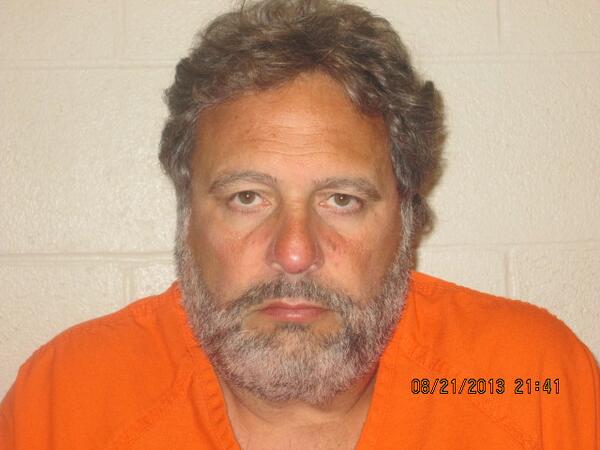
Late today, a grand jury indicted attorney Anthony Calabrese III (pictured) on two counts of bribery and one charge of theft by deception. All three charges seem closely related to federal charges to which Calabrese has already pled guilty.

“Cuyahoga County Grand Jury Issues First Indictment for Corruption Related Offenses,” reads McGinty’s press release, which went out at 5:36 pm. And yes, that word “first” implies what you think it implies.

“There will be more indictments,” McGinty’s spokesperson, Maria Russo, said this evening. She wouldn’t elaborate.

Calabrese is charged with bribing Jimmy Dimora and Frank Russo, indirectly, by directing J. Kevin Kelley to pay for their tickets to Las Vegas in 2008, in order to get Dimora and Russo to help restore funding to Alternatives Agency, a nonprofit Calabrese represented as a lawyer. In the theft by deception charge, Calabrese is accused of getting Alternatives Agency to pay Kelley and Anthony Sinagra as consultants, even though they did no work.

But Calabrese has already pled guilty to federal charges involving the trip to Vegas and the consulting payments to Kelley and Sinagra – bribery, bribery conspiracy and mail fraud conspiracy, to be exact.

So what’s going on?

Today’s charges could be part of a mop-up operation, where McGinty looks at whether leads from the FBI investigation point to violations of state law. He may be looking to file direct charges of bribery and theft where the feds could only make conspiracy, wire fraud or mail fraud charges.

McGinty may also be taking over late-breaking leads in the corruption probe. Federal law has a five-year statute of limitations on bribery and similar crimes, so the U.S. Attorney’s time to file new charges from the corruption probe is running out. (The FBI raided the county building, breaking up the corruption regime, on July 28, 2008.) But Ohio has a six-year statute of limitations, so McGinty has more time.

What might the new lead be?

I wonder if McGinty is probing Calabrese and Kelley’s relationship because he wants to know if they corrupted the county’s 2005 purchase of the Ameritrust complex. County executive Ed FitzGerald told me in January that he’s asked McGinty to probe Calabrese’s relationship to the Ameritrust deal.

At one point last year, federal prosecutors alleged that Calabrese promised to reward Kelley if he successfully lobbied Jimmy Dimora to vote to buy the Ameritrust property. Two months after the sale, the feds claimed, Kelley received $70,000 and a company with a tie to Calabrese received $99,000 from unidentified sources.

But the feds aren’t pursuing that lead anymore. They included it in a witness tampering charge against Calabrese, but dropped that charge in exchange for Calabrese’s guilty plea on 18 other counts.

Calabrese, unlike the other federal corruption defendants, didn’t agree to cooperate with investigators when he pled guilty. So the new charges could increase the pressure on Calabrese to make a deal with McGinty. (Calabrese also faces charges in an unrelated case: he's charged with trying to bribe rape victims to change their testimony at a sentencing.)

Calabrese is the last big lead in the corruption probe.  What more might he know?

Update, 4/14: The Plain Dealer runs a front-page followup today that's basically an 1,120-word question mark. It quotes a bunch of people puzzled over what the hell McGinty's doing. The story says McGinty "stunned federal officials" by charging Calabrese, but doesn't give details.

If McGinty really is just going to pile state charges on top of everyone's federal charges, that's really weird.  I still think McGinty may be trying to work his way up to probing the Ameritrust scandal. But Jim Jenkins, attorney for corruption defendant Daniel Gallagher, offers the PD another theory: McGinty may be trying to go after the corrupt officials' pensions.

Wednesday, January 30, 2013

FitzGerald: Calabrese holds key to 2005 Ameritrust inquiry

The Ameritrust debacle is almost over. Cuyahoga County is on the verge of selling the old bank complex for $27 million -- or $18 million less than it spent on it.

But there’s still a major question about the old government’s 2005 purchase of the Ameritrust complex. Will the public ever know if it was just an unwise deal, or if wrongdoing was involved?

County executive Ed FitzGerald thinks attorney and corruption defendant Anthony Calabrese III knows the answer, and he wants county prosecutor Tim McGinty to get it out of him.

“You asked what the chances are the public will ever know,” FitzGerald said to me last week. “I think Mr. Calabrese knows! And I think he has even more incentive to be cooperative with the county.”

Calabrese (pictured), the last defendant to plead guilty in the federal government’s Cuyahoga County corruption probe, finally admitted to 18 corruption crimes this month. But federal prosecutors agreed to drop the one charge that involved the Ameritrust complex.

Meanwhile, McGinty has charged Calabrese in county court with conspiring to bribe two rape victims to change their testimony. Calabrese has pleaded not guilty.

McGinty’s office says the county and federal cases are unrelated. Still, FitzGerald thinks McGinty could use the new bribery charge as leverage to get to the bottom of the Ameritrust affair.

“Somebody that is a central figure in the Ameritrust transaction is also facing county charges,” FitzGerald said. “It gives them a pretty good incentive to cooperate.”

In 2005, Calabrese was an attorney representing The Staubach Co., the county’s real estate consultant. Last June, federal prosecutors alleged that Calabrese asked J. Kevin Kelley to lobby Jimmy Dimora to buy the Ameritrust complex and promised to reward him if the county went through with the sale. Two months after the deal went through, Kelley received $70,000 and a company with a tie to Calabrese received $99,000 from unidentified sources, prosecutors claimed.

The FBI and IRS began probing the Ameritrust project in 2007. They investigated whether any money from Staubach was “funneled through others for the ultimate benefit of public officials” – but they couldn’t make a case. Instead, they charged Calabrese with witness tampering in connection with the Ameritrust affair, claiming that in August 2008, after the FBI raids on county offices, Calabrese met with Kelley and made false statements about the company that had given Kelley the $70,000.

But it looks like the feds are done digging into the Ameritrust purchase. They agreed to drop the witness tampering charge against Calabrese in exchange for his guilty pleas on the 18 other charges (his role in Dimora’s Vegas trip, etc.). And Calabrese’s plea agreement does not include any agreement to cooperate with the federal probe.

If federal prosecutors have dropped the Ameritrust affair, it may be because it’s too late for them to dig deeper. There’s a five-year statute of limitations on most federal crimes, including the bribery and extortion statutes often used in public corruption cases. The Ameritrust deal went down 7½ years ago.

In state court, most felonies have a six-year statute of limitations. That leaves one more approach, a lawsuit.

“I have had extensive conversations with prosecutor McGinty about taking civil action,” FitzGerald said last week.

His administration’s two investigations of the Ameritrust purchase appear to have formed his brief for McGinty. Inspector general Nailah Byrd told me her inquiry has been forwarded to another agency she couldn’t name. Law director Majeed Makhlouf, who was also looking into the Ameritrust affair, says he has discussed it with McGinty. “I think he’s interested in it as well,” Makhlouf says.

FitzGerald has made it clear he’d like to sue the former Staubach Co., which made $3 million in broker’s fees off the 2005 Ameritrust purchase. The county executive is a former FBI agent, and the deal seems to have reawakened his investigatory instincts. And, of course, the more mismanagement by the old government he can uncover, the more he burnishes his reformer credentials -- at the same time he’s exploring a run for governor.

Staubach’s potential defense seems clear. Rob Roe of Staubach (now part of Jones Lang LaSalle) told me last year that the old county government actually disregarded his company’s advice about the Ameritrust complex. Roe also said nothing about Calabrese’s conduct while representing Staubach appeared improper or gave him pause, and that Calabrese never talked with him about using any connections in county government to help with the contract.

McGinty’s spokesperson declined to comment about FitzGerald’s comments, saying the office couldn't comment about an open investigation. Calabrese’s federal attorney, Chad Ziepfel, also declined comment.

We’ll see if Calabrese talks to McGinty about the Ameritrust complex. Maybe he won’t. He already faces a likely nine-year sentence in federal prison, and that didn’t motivate him to cooperate with the feds.

Is time running out for county action on the Ameritrust purchase? Normally, lawsuits over contracts in Ohio have an eight-year statute of limitations, which would bar a suit from being filed after this September. But McGinty could possibly use this law, which says a prosecutor can sue for damages over a county contract “procured by fraud or corruption.” It’s not clear whether that law has a time limit attached.

(Photos: Cuyahoga County Sheriff, clevelandskyscrapers.com)

Saturday, October 13, 2012

Can Frank Russo please go to prison now?

UPDATED below with news of prosecutors' motion.

Two years after ex-auditor Frank Russo pleaded guilty to stealing more than $1 million from taxpayers, he's still free and living large.

I haven't heard of any Russo sightings in Tremont restaurants lately, but he's comfortably dwelling in a Mayfield Heights condo bought by his longtime housemate, Michael Calabrese, in January. Even county exec Ed FitzGerald has lost his patience, ripping the feds at a town hall meeting Wednesday for Frank's sweetheart fink deal.

Now comes word that Russo's former chief deputy, Samir Mohammad, is pleading guilty to cash-bribing sleaze.  Can Russo please go to prison now?

With Mohammad pleading Monday, only two big cases are left to go in the five-year-long Cuyahoga County corruption scandal.  Charges against Robert Peto, the former port authority board member, don't appear related to Russo at all.

That leaves the February trial of Anthony Calabrese III, who faces 20 charges, including some stemming from his alleged role in Russo and Jimmy Dimora's infamous bribe-spiked Vegas trip. (Calabrese is also accused of witness tampering to cover up possible bribes related to the county's purchase of the Ameritrust Tower.)

Prosecutors say they need Russo close by to prepare for his court testimony. But Russo should only need to testify about two alleged schemes at the Calabrese trial: a contract steered to a halfway house and an alleged property assessment fixing for a senior community in Euclid.

It's time for the feds to do their prep work.  Because it's time for Russo to start doing time.

Update, 10/15: Finally! Prosecutors filed a motion today saying Russo's cooperation is "substantially complete" and asking for a court hearing, where it can recommend a reduction in his 22-year sentence for his testimony.  They want to hold the hearing by Oct. 25.