Thursday, August 22, 2013

McGinty likely wants to question Dimora about 2005 Ameritrust deal


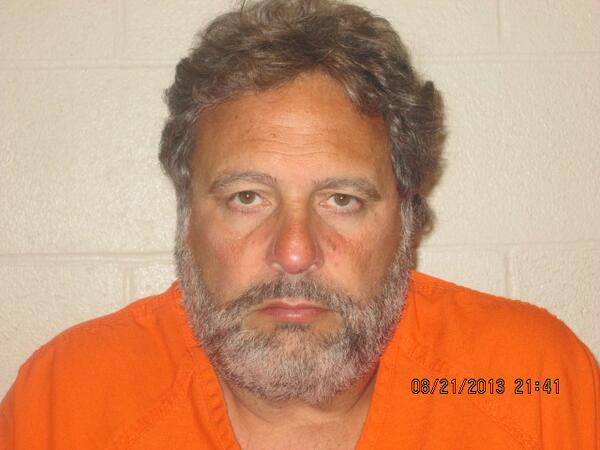
What's Jimmy Dimora doing in the Cuyahoga County jail? He was moved there from federal prison last night, and in his jail booking photo, he doesn't look too happy about it.

Journalists' Twitter feeds lit up with the news this afternoon. Several reporters said Dimora will go before a county grand jury. Why?

"Prosecutors apparently want to question Dimora about lawyer Anthony Calabrese/Ameritrust deal," WKYC's Tom Meyer tweeted.

I think Meyer's right.  County prosecutor Tim McGinty is trying to get to the bottom of the last big unanswered question in the five-year-old county corruption scandal: Was the county's 2005 purchase of the Ameritrust Tower corrupted in some way?

This January, county executive Ed FitzGerald told me he'd asked McGinty to investigate the Ameritrust purchase, especially corruption defendant Anthony Calabrese III's role in it.  McGinty did just that.

The prosecutor hit Calabrese with a six-count indictment last month, including conspiracy and corruption charges that include the 2005 Ameritrust deal.

The indictment charges that Calabrese -- then an attorney for The Staubach Co., a real estate consultant for the county on the Ameritrust deal -- got Dimora crony J. Kevin Kelley to provide him with "non-public information ... from Dimora relating to the then-forthcoming purchase of Ameritrust by Cuyahoga County." After the sale went through, McGinty alleges, Calabrese arranged for an unnamed businessman to pay Kelley a $70,000 bribe for his help.

Now, the reports that Dimora will be put before a grand jury to testify suggest that McGinty is considering further charges against someone. Where's he going with this?

Dimora is named as an unindicted co-conspirator in the Calabrese indictment. It mentions him in connection with the Ameritrust sale and Dimora's famed trip to Vegas.  Why rehash Vegas?  Because conspiracy charges can reach back beyond Ohio's six-year statute of limitations on bribery. To charge anyone with crimes related to the 2005 Ameritrust deal, McGinty needs to prove that it was part of a larger conspiracy that was still active six years ago.

Federal investigators also looked into Calabrese's ties to the Ameritrust deal, and they charged Calabrese with witness tampering in relation to the $70,000 payment to Kelley -- but they dropped that charge when Calabrese agreed to plead guilty to 18 other crimes. Significantly, Calabrese's federal plea deal included no agreement to cooperate with the feds. Does that mean he still has secrets to keep?

==

To read more coverage of the 2005 Ameritrust purchase, follow these links:

"FitzGerald: Calabrese holds key to 2005 Ameritrust inquiry," Jan. 30, 2013

"FBI, IRS investigated Dimora, Kelley, payment to Staubach Co. over Ameritrust Tower purchase," June 7, 2012


Wednesday, August 21, 2013

Will Zack Reed win reelection from jail?

So Zack Reed is guilty of his third DUI. His long reign as councilman for the Warehouse District has finally caught up to him. He’s headed to jail this time, for somewhere from 10 days to six months. He’ll be sentenced Sept. 5 – five days before the city council primary.

Is this the end of Reed’s political career? I don’t think so. We may be about to witness the spectacle of a popular city councilman getting reelected from the Cleveland House of Correction.

While he's still a free man, Reed’s running hard. Sunday, he tweeted that’s he’s got 500 yard signs planted in his ward. WKYC’s man-on-the-street interviews yesterday in Ward 2, on Cleveland’s far south side, found many residents ready to reelect him. People like his fiery, fighting style. His three challengers have nowhere near his name recognition.

“Drunk or not, Zack outworks the rest of them,” says local political activist and commentator Mansfield Frazier (who lives in Hough). “I’ve been to meetings at 7 a.m., and there’s Zack.”

Reed sounded contrite in an interview with WKYC’s Tom Beres. “I need to abstain from alcohol, and I will work to ensure that happens,” he said.

“The credibility of my family’s been lost. The credibility of my friends have been lost. And now the credibility of my constituents have been lost,” Reed said. “And now I’ve got to go back out to work to get that credibility back again.”

That humility is probably what his voters want to hear. Redemption stories play well in city politics.

City council president Martin Sweeney has called on Reed to resign. But Reed has no intention of quitting. So how much farther will Sweeney go?

The council can boot Reed out if he misses ten council and committee meetings for any reason, including an extended jail stay. But why kick him off council if voters are going to send him back in January?

Even if visiting judge Larry Allen gives Reed the maximum six months, would council kick him off twice, in 2013 and 2014? Not likely. Expelling a fellow member is a hard vote for a councilperson. It would bring up tough questions. Mike Polensek has already protested that other council members have skipped meetings without punishment. Others may ask why Sweeney ally Eugene Miller hasn’t been kicked off for his address snafu.

It looks like Reed will ride out his jail stint and stay on council through 2017 -- even if he has to get to City Hall by bus.

Wednesday, July 17, 2013

After Cuyahoga council kills campaign finance reform, what's next?

If you want to get really depressed about our local representative democracy, I invite you to watch this video of the Cuyahoga County Council, petulantly refusing to regulate donations to county political campaigns in any way whatsoever.


By a 9-2 vote last week, the council members left the door wide open for gargantuan checks to flood the 2014 race for county executive, and maybe even their own re-election funds. They rejected a charter amendment that would give them the power to regulate donations in races for county executive, council and prosecutor. Single donations of $20,000, $50,000, $100,000, $400,000? It’s all legal!

Take a look at the video, from 43:00 to 1:11:00.  You'll see that allowing a single wealthy donor to dominate a politician’s campaign fund -- and wield way too much influence on them once elected -- doesn’t faze the council.

Councilmen Michael Gallagher and Dan Brady said there’s no evidence of a problem to fix. Sunny Simon said she doesn’t want to limit candidates’ ability to compete with self-funding millionaire candidates. Gallagher and Jack Schron complained that they, as elected officials, already have to follow too many campaign regulations. Council president Ellen Connally said regulating more could create a “chilling effect” on candidates running for office. Some said they didn’t want to be stuck making rules that applied to themselves.

All in all, the council showed lots of concern about themselves and other politicians, and little for the voters who want elected officials to listen to them, not one or two wealthy patrons.

The council’s decision means five- and six-figure donations can play a big role in the 2014 race for county executive. It happened in last year’s race for county prosecutor. One man, local businessman Robert Kanner, gave winning candidate Tim McGinty $50,000 – a quarter of all the money, $203,000, that McGinty raised for the Democratic primary race. That doesn’t necessarily mean Kanner will have undue influence over McGinty –- but doesn’t it at least create the potential for influence, or the appearance of influence?

What about the $36,000 that the late Dick Jacobs gave to Jimmy Dimora’s 1998 campaign for county commissioner? We can’t say that early seed money influenced Dimora’s bad decision to buy the Ameritrust complex from Jacobs in 2005. But since prosecutors alleged yesterday that Dimora leaked secret information about the Ameritrust deal, isn’t this at least an example of why one local businessman shouldn’t be able to give that much money?

Two councilpeople voted yes on the campaign finance amendment, Julian Rogers and Dave Greenspan.

“I think it helps to build trust if people know that they can’t necessarily buy influence from their county council person,” says Rogers. “The way it’s currently set, one person can make a contribution that funds an entire campaign for a county councilperson.” (Rogers says he spent about $47,000 on his campaign.)

“Where the county has come from, appearances mean a lot,” he adds. Donor limits are “an opportunity to continue the good effort we’ve begun to bolster our standing in the community and bring back some trust.”

Local activist Greg Coleridge, who’s worked for years to try to regulate money in local elections, says the council’s refusal was disappointing and surprising. He says rejecting the power to regulate campaign finance at all sends a terrible message.

“Hey, we’re open for business!” Coleridge says. “We’re the Wild West! There’s no limits, no enhanced disclosure… Pay to play! Here we are!”

Amid the council members’ self-serving arguments, I also heard resigned cynicism. They know it’s hard to create campaign finance reform in the wake of court cases such as the U.S. Supreme Court’s Citizens United decision. Gallagher said he feared donor limits would lead the wealthy to form PACs to go around them – a possibility, but one that’s rare on the local level. Brady complained about Citizens United’s protection of anonymous campaign literature. He and Chuck Germana voted no on the charter amendment, saying public financing of campaigns is the only way to make a difference.

“In a sense, we agree with council,” says Coleridge. He’s part of the Move to Amend effort to overturn Citizens United with a constitutional amendment. “You’re not going to find an absolute loophole-free set of campaign contribution limits.

“In the meantime, to throw up your hands and say we shouldn’t even do anything is sending the message that those who have the most money will have their voices heard loud and clear. And it sends the perception that those who don’t have money, their voices are not going to be heard.”

Coleridge served on a transition panel that recommended sweeping ideas for clean county elections to the new government in 2011, including public financing for county campaigns. The panel’s ideas were ignored.

I think council’s refusal to act on donor limits opens up a chance for reformers to go big. They could start a petition drive for a clean elections charter amendment much like the 2011 proposal: donor limits, electronically searchable campaign reports, and public financing that helps candidates without wealthy supporters to compete.

It wouldn’t be easy. It takes more than 33,000 signatures to get a charter amendment on the ballot. But it’s not impossible. The charter’s framers gathered more than 70,000 signatures to get our new form of government on the 2009 ballot. Coleridge’s group recently collected more than 3,000 signatures for its Move to Amend petition in Cleveland Heights alone.

So far, I’m not hearing anyone in town who’s ready to take this issue directly to the voters. But campaign finance limits are exactly the sort of issue the initiative process was created to address. Voters know that a single wealthy businessperson shouldn’t be able to singlehandedly fund a candidate’s campaign. But the political system won’t do anything about it. Will we?

Monday, July 1, 2013

How to ban big money from Cuyahoga Co. elections

It’s time to finish the job of reforming Cuyahoga County government.

Today, the charter review commission releases its proposed amendments to the county charter. Most of its ideas would tweak the checks and balances in our new government -- making it harder for the county executive to fire the sheriff, for example, or writing the job of inspector general into the charter. 

But the best idea is designed to keep big money out of our elections and preserve our political leaders’ independence. It’s an amendment that would give the county council the duty to write campaign finance laws to govern county elections, including limits on campaign donations. 

Right now, wealthy donors can give unlimited contributions to a county executive or county council candidate – checks so big, they practically obligate candidates to give the donor special access once in office.  Five- and six-figure political donations are perfectly legal, even though they can drown out the voices of small donors and non-donors.

“Nationwide, not just this county, the funding of campaigns has gotten totally out of control,” says Bruce Akers, chairman of the charter review commission and a co-author of the 2009 charter.

“You can’t tell me that when candidate Jones or Smith gets elected and someone’s given him six or seven figures … [that it] doesn’t have influence,” Akers says. “There’s got to be some kind of parameters.”

A charter amendment may be the only way Cuyahoga County can limit big-money donations in its elections. Check out this quote from the Secretary of State’s Ohio Campaign Finance Handbook (pdf):

County or local candidates are not limited in the amount of contributions they may receive… unless there is a municipal or county charter that provides otherwise.

The old county government gave us a great example of the need for donor limits. The late developer Dick Jacobs gave Jimmy Dimora $36,000 and Peter Lawson Jones $25,000 in their first races for the old county commission. In 2005, Dimora and Jones voted to buy the vacant Ameritrust complex from Jacobs for almost $22 million. Jacobs got rid of a skyscraper albatross; taxpayers got stuck with it and took a big financial loss.

Can we do better?

Campaign finance reform faces three hurdles. First, the county council would have to vote to put the amendment on November’s ballot. Voters would have to approve it. Then the council would have to use its new power and enact meaningful limits -- in 2014, the year that half of them run for reelection.

That’s hardly a sure thing. Council members may be reluctant to limit donations to their own campaigns. It’s hard to raise a lot of small donations, easier to find a few wealthy sugar daddies.

“It’s difficult for officeholders to put a restriction on themselves,” Akers says. “That’s human nature.”

Which is why Akers and charter commission member William Tarter, Jr., have another idea. In a minority report, they’ve proposed an alternative charter amendment that would require Cuyahoga County to adopt the same campaign finance limit Ohio imposes in state races: currently $12,300. If the council were to put that on the ballot, voters could ban enormous, out-of-control donations in time for the 2014 county executive and council election.

The downside of Tarter and Akers’ idea is that a $12,300 limit is still too high. In races for president or Congress, a donor can only give a candidate $2,600 a year. In elections for Cleveland mayor and city council, it’s $1,000. Lower limits would do more to keep big donors from drowning out the voices of small donors and non-donors. Would the county council go for that?

Maybe – if enough people get behind campaign-finance reform and pressure the council to act.

It makes sense for us to debate how to choose a clerk of courts, protect the inspector general, and change sheriffs. But we can’t let those debates distract from the most important one we need to have this summer: how to keep big money from controlling our new government.

Update, 3:30 pm: Here is the charter review commission's report, which proposes 15 amendments to the county charter. The campaign finance proposal is on page 10.  Tarter and Akers' minority report is on p. 41.

“In 2010,” Tarter and Akers note, “one county candidate received $400,000 from a single individual.” They're thinking of Matt Dolan, who got $400,000 from his uncle, Charles Dolan of Cablevision, and $300,000 from his father, Indians owner Larry Dolan.

I'll write about the other major amendments later this month.

Thursday, June 27, 2013

Council drama: Jeff Johnson vs. Eugene Miller, Brian Cummins vs. Garcia & Cintron, Zack Reed vs. DUI charge

Zack Reed's running for reelection to city council despite his latest drunk-driving charge. Brian Cummins faces two Hispanic challengers. And Jeff Johnson's run against Eugene Miller threatens Martin Sweeney's council leadership.

Those are the big storylines we'll see in this fall's Cleveland city council races -- set in motion today, the filing deadline for the city's September 10 primary.

"I am now an official candidate in the race to retain the Council seat in Cleveland Ward 2," Reed tweeted last night. His toughest opponents may not be his four challengers, but his own legal troubles.

Reed is set for trial August 15 on his third drunk-driving charge, this one based on a March arrest. He could lose his council seat if a long jail sentence prevents him from showing up to enough meetings.

But Reed, who's been on council since 2000, has survived adversity before. A blunt maverick who ignores council's peculiar rules of deference, he beat an 2009 attempt to gerrymander him out of a job. He ran in a new ward in the Mt. Pleasant neighborhood and won 65 percent of the vote.

Brian Cummins, another maverick who beat a nasty gerrymander four years ago, faces a challenge of a different sort. He's a white guy in a ward redrawn this year to maximize the number of Hispanics in it.

Cummins' Ward 14 includes the Puerto Rican neighborhood around W. 25th St. and Clark Ave. The ward's political atmosphere is charged this summer because of the May 6 escape of Amanda Berry, Gina DeJesus, and Michelle Knight from Ariel Castro's Seymour Ave. home. Hispanic activists want to redouble their efforts to improve the neighborhood to help move it beyond the Castro case's stigma. For some of them, electing a Hispanic councilman is part of the agenda.

Nelson Cintron, a former councilman with a checkered past, is running against Cummins. So is newcomer Janet Garcia, an insurance agent who seems to have a well-organized campaign. Cummins and Garcia both attended a Hispanic town hall meeting at Lincoln-West High School two weeks ago. After the meeting split into breakout sessions to brainstorm goals, Garcia spoke for her group and called for electing a Hispanic political leader. Cummins let someone else speak for his circle, but he, too, is paying attention to Latino issues, talking up plans to develop W. 25th and Clark into a "Hispanic Village," a destination built on ethnic stores and restaurants, like Little Italy.

In northeast Cleveland, Jeff Johnson aims to thwart council president Sweeney's redistricting map.  The new ward lines seemed to force Johnson into a race against fellow Glenville councilman Kevin Conwell.  Instead, Johnson is running in a weirdly drawn district that was stretched from South Collinwood through Glenville along St. Clair Avenue to try to set up Eugene Miller, a young Sweeney loyalist, with a safe seat.

The race is a high-risk, high-reward move for Johnson, who was considered Mayor Mike White's heir apparent until his 1998 extortion conviction and could be a mayoral contender again once Frank Jackson retires. (You can read Cleveland Magazine's 1999 profile, "The Rise and Fall of Jeff Johnson," here.)

Over in Hough's Ward 7, incumbent T. J. Dow faces a crowded field, including former interim councilwoman Stephanie Howse and Basheer Jones, a former radio host, poet and motivational speaker.

That race and the Johnson-Miller race could help determine whether the controversial Sweeney can remain council president -- or, whether Sweeney can successfully hand off the presidency to his top lieutenant, Kevin J. Kelley.

Tuesday, June 18, 2013

Cimperman, Turner to perform in marriage equality play ‘8’

How's this for dramatic timing? Just as the U.S. Supreme Court gets ready to rule on gay-marriage cases, two Cleveland political leaders and several theater groups are seizing the moment.

Joe Cimperman and Nina Turner join a cast of actors next Sunday, June 30, to perform 8, a documentary play about the trial over California’s gay-marriage ban.

The one-night show will take place a few days after the U.S. Supreme Court's ruling on California's Proposition 8, which is expected next week or this Thursday.

The show is a staged reading, so the actors will read from scripts. But it’s a courtroom drama, so perhaps the actors will just come off like lawyers consulting their notes. The play is based on the transcripts from the 2010 trial, interviews and observations of the arguments. It’s written by Dustin Lance Black, an Oscar-winning screenwriter who wrote Milk and J. Edgar.

Cimperman, the longtime Cleveland city councilman, and Turner, the high-profile state senator and likely candidate for secretary of state, will be part of a 21-person cast that will also include local actors and leaders of various nonprofit organizations.

No word yet on who will play key roles, including the two couples fighting for the right to marry or super-lawyers Ted Olson and David Boies, who battled in Bush vs. Gore but formed a conservative-liberal dream team to fight the law.

After the performance, City Club CEO Dan Moulthrop will moderate a debate between two gay-marriage advocates and Rev. Jimmie Hicks, who was voted off the Cleveland Heights City Council after opposing the city’s domestic partnership registry. You’ve got to give him credit for showing up. This’ll be a tough crowd for him.

8 plays at 5 pm on Sunday, June 30 at the Allen Theatre in PlayhouseSquare. Tickets, which benefit the Cleveland chapter of PFLAG and the pro-gay-marriage American Foundation for Equal Rights, are $25. 

Update, 6/30: Peter Lawson Jones, the actor and former Cuyahoga County commissioner, played Olson. Turner wasn't in the cast after all, though she appeared in a recorded video shown before the play. 

Cimperman played an expert witness in the case. So did state Rep. Nickie Antonio of Lakewood, Ohio's first openly gay state legislator.  Her character's dialogue with an attorney sparked laughter in the audience. The attorney asked her if gays and lesbians are under-represented in elected office. "Yes," she replied.

Wednesday, June 5, 2013

Will unlimited donations flood county exec race?

How much money should a single wealthy person be allowed to give candidates for Cuyahoga County executive?

$1,000? $5,000? $12,000? $25,000?

How about $100,000? $300,000? Or $400,000?

Guess what? Due to a huge gap in the law, there’s no limit to what one person can donate to a candidate for county office.

This hole is big enough to buy a government through. It should’ve been plugged when we got a new county government. But proposals to fix it have gone nowhere.

Now, there’s finally some hope for change. Cuyahoga County’s charter review commission is considering two proposals to cut off the unlimited flow of money starting in 2014. It’s set to debate both ideas at its meeting Saturday morning, the 15th.*

It’s time for someone to act. Candidates are already running to succeed Ed FitzGerald next year – and right now, millionaires are free to invest five-figure or six-figure donations in them, in hopes of getting VIP access once they’re in office.

Races for federal, state, and Cleveland offices have sensible limits on one person’s ability to influence a candidate with donations. You can only give a candidate for president or Congress $2,600 a year. In Cleveland’s mayor and city council races, it’s $1,000. Ohio has much higher limits on donations to candidates for state office -- $12,300 this year – but that’s better than nothing.

The framers of the new county charter should have established limits on donations in 2009. But they didn’t. They unwisely punted the decision to the very elected leaders who stand to benefit from big donations.

During the transition to the new government, an advisory group suggested limits of $750 per election cycle to county council candidates and $1,000 to candidates for executive and prosecutor.

But the new county council failed to act. It debated whether to adopt the statewide limits of $12,300 as its own, or lower limits, but did neither.

Now, the charter review commission -- which has until July 1 to propose amendments to the county charter -- is considering two campaign finance reform ideas.

One proposed amendment would explicitly give the county council the power or duty to enact campaign finance laws, including limits on donations. That would prod the council to act.

The other comes from charter commission member William Tarter. He proposes amending the county charter to establish the same limit per donor in county races as in state races, $12,300.

Tarter says limits on huge contributions help empower smaller donors. “This is an opportunity for people to feel their contribution has a greater impact on the candidates,” he says.

Bruce Akers, chairman of the charter review commission, says the panel is “very divided” on the subject of campaign finance. Some members support Tarter’s idea. Others support new charter language that would nudge the council to act. One member is opposed to taking any action about campaign finance at all.

Citizens who want to limit big money’s influence on our local politics ought to get involved in this debate right away. But they face a dilemma. Should they back Tarter’s more specific proposal to link county donor limits to the state’s high limits? Or back an amendment that would put the issue back before the county council -- which might enact lower limits, but might enact none at all?

Tarter’s proposal would, at least, stop the biggest checks from flowing. And the last race for county executive proves it’s time to make a change.

In 2010, candidate Matt Dolan got contributions of $400,000 from his uncle, Charles Dolan of Cablevision, and $300,000 from his father, Indians owner Larry Dolan. The next six-figure donations may not be a family affair.

Big checks flowed to the old county government too. Before the late developer Dick Jacobs sold the Ameritrust complex to Cuyahoga County in 2005, he had a five-figure donor relationship with commissioners Jimmy Dimora and Peter Lawson Jones. Jacobs seeded their first campaigns for commission seats, giving Dimora $36,000 in 1998 and Jones in 2002.

Maybe Jacobs’ donations had nothing to do with the county’s unwise purchase of the Ameritrust complex, which led to an $18 million loss for taxpayers. But it’s a spectacular example of why no single donor should dominate an elected leader’s campaign fund -- and why campaign finance limits are the Cuyahoga County reform effort's biggest unfinished business.

*Update, 6/10: I originally wrote that the charter commission would discuss campaign finance "this Saturday," meaning the 8th. The commission ended up not tackling it on the 8th.  It'll take up the question on the 15th.